APARTMENT WITH A STRAW WALL
Type: private apartment
Category: interior architecture and design
Year: 2025
Photography: Olga Muskala
In collaboration with: Simone Holzapfel
The apartment had stood vacant for years. “Not rentable,” was the real estate agent’s assessment. And yet, it is sunny, centrally located, and quiet, with views of greenery, excellent public transport connections, and restaurants and local amenities in the immediate vicinity. The condition of the apartment stood in stark contrast to its spatial qualities: worn laminate flooring and a kitchen already defective after just 15 years defined the space.
Our goal was to renovate the apartment exclusively using existing resources, complemented only by high-quality, sustainable new materials.
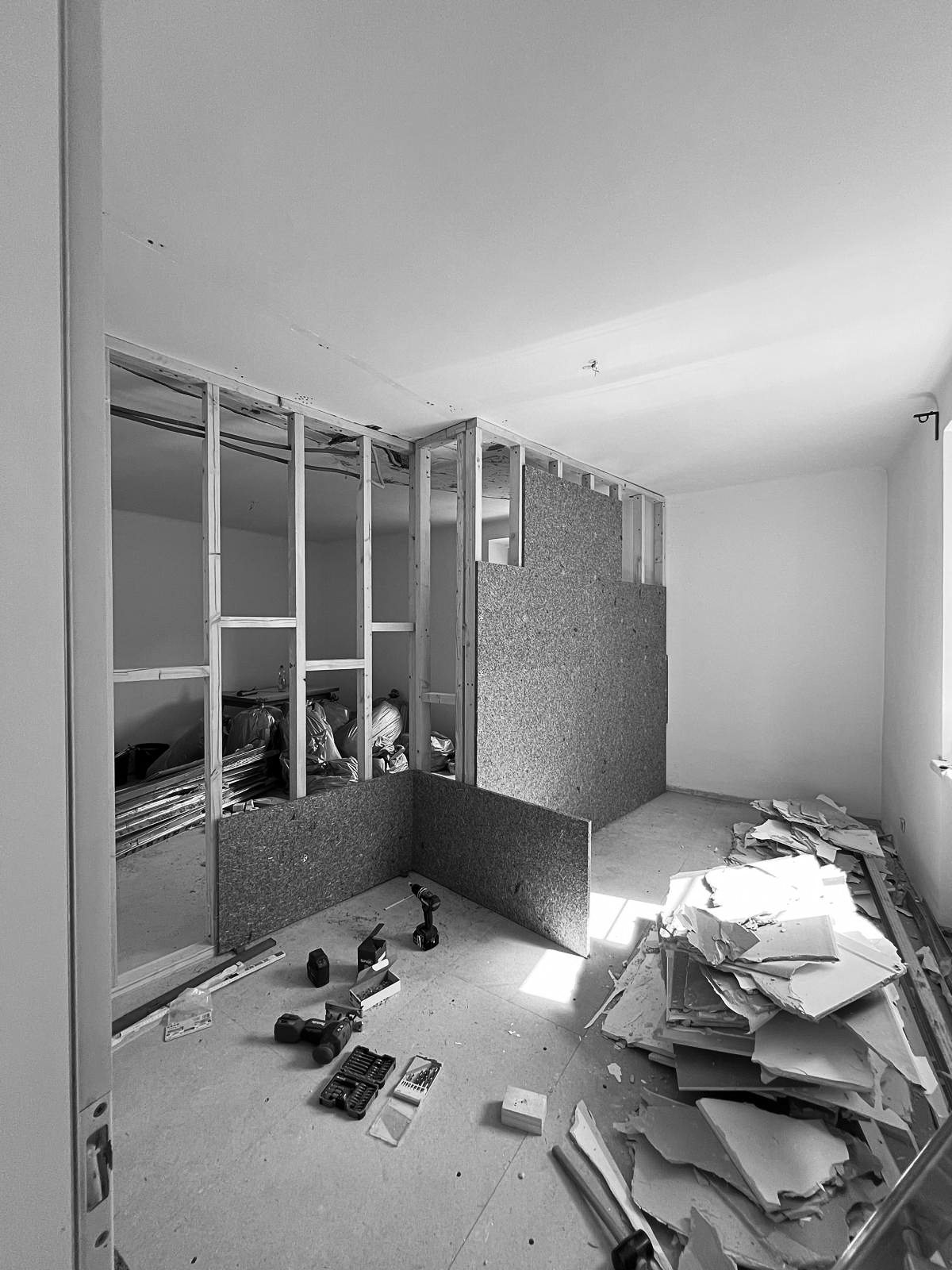
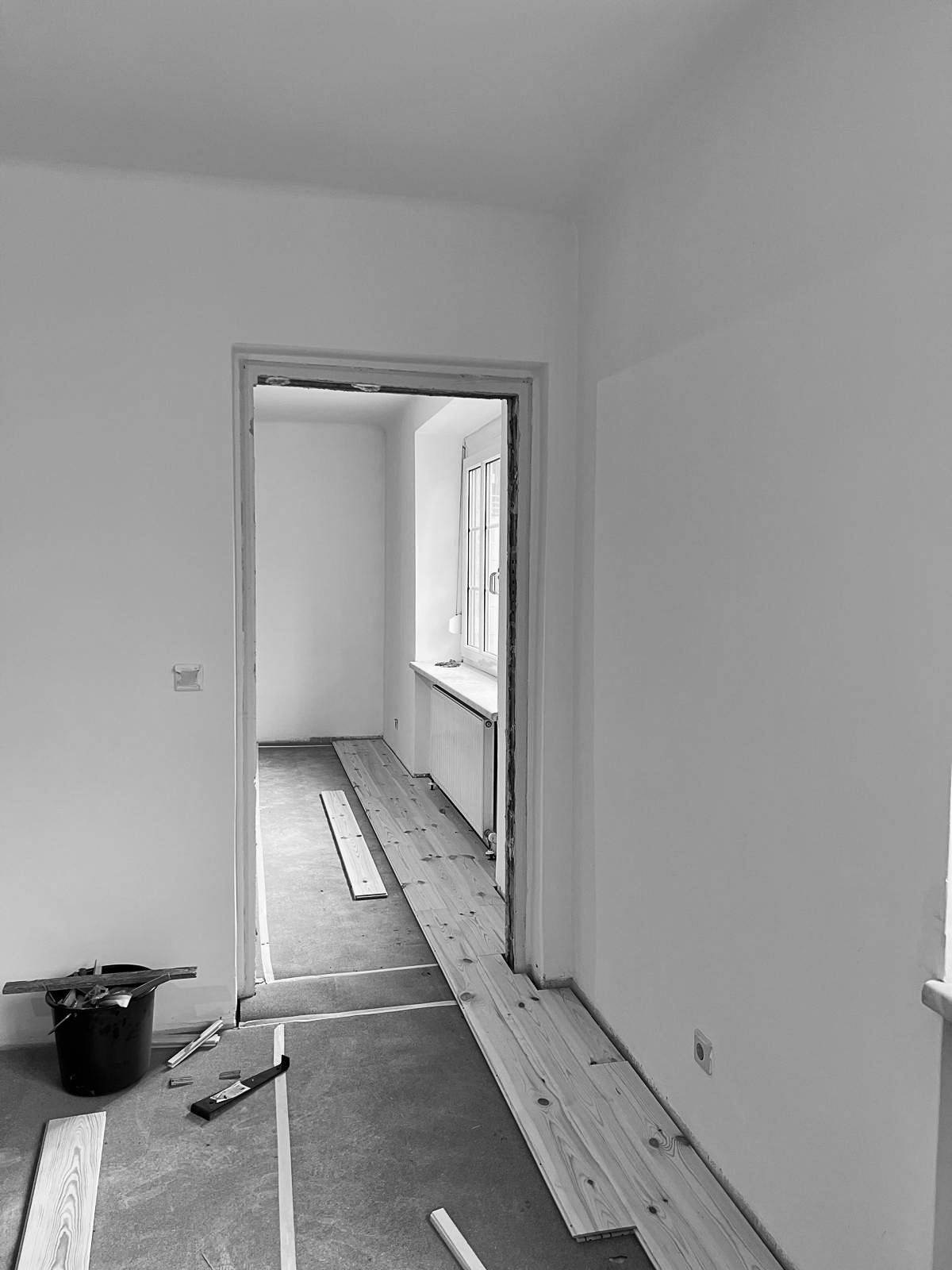
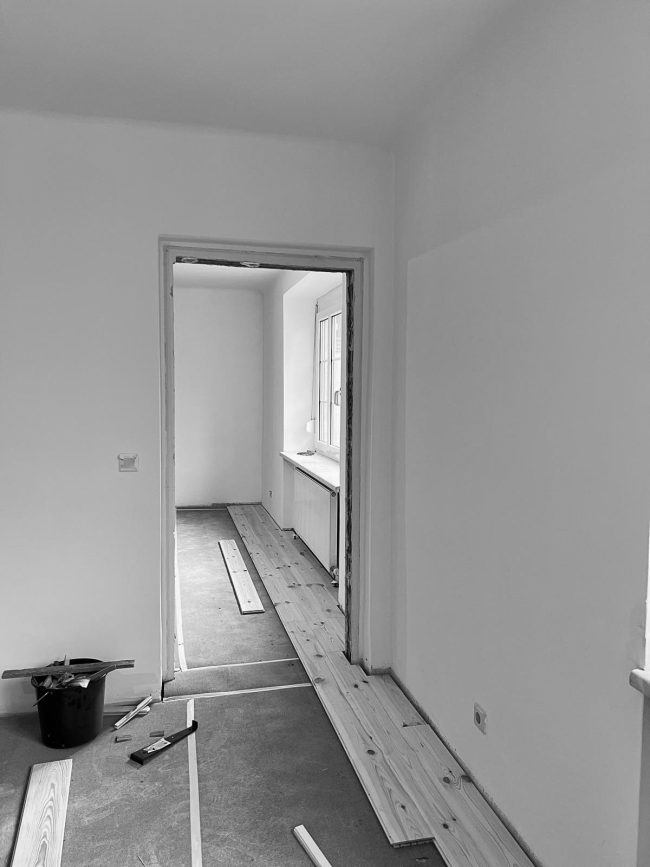
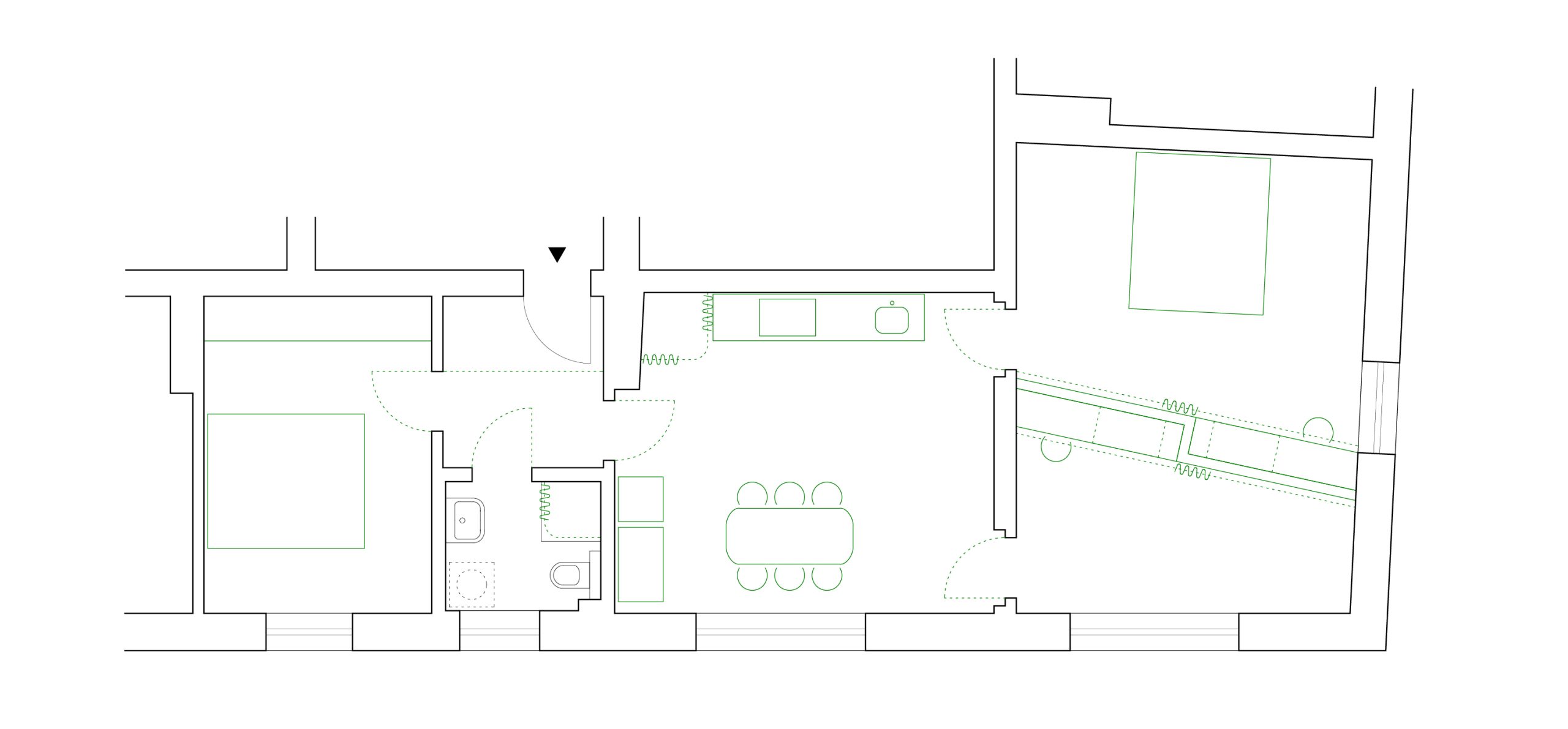
With approximately 70 m² and three separately accessible bedrooms plus an open-plan kitchen and dining area, the floor plan was nearly ideal. Only the wall between the two eastern rooms required rethinking. Its former position resulted in one of the rooms being poorly lit. The new wall was intended not only to divide the space but also to enable flexible furnishing and use. It was positioned to create niches in both rooms, providing space for shelving, wardrobes, and desks. A simple shelving system was used, allowing tenants to adapt and expand it individually. Curtains make it possible to separate the niches when needed.
The wall itself also serves as an experiment in making new ecological materials visible: a timber frame construction insulated with sheep’s wool and clad on both sides with straw–lime panels. These were treated with hard oil to fix loose straw fibers and neutralize odors. The surface creates a tactile and visual accent while its structure also improves the room acoustics.
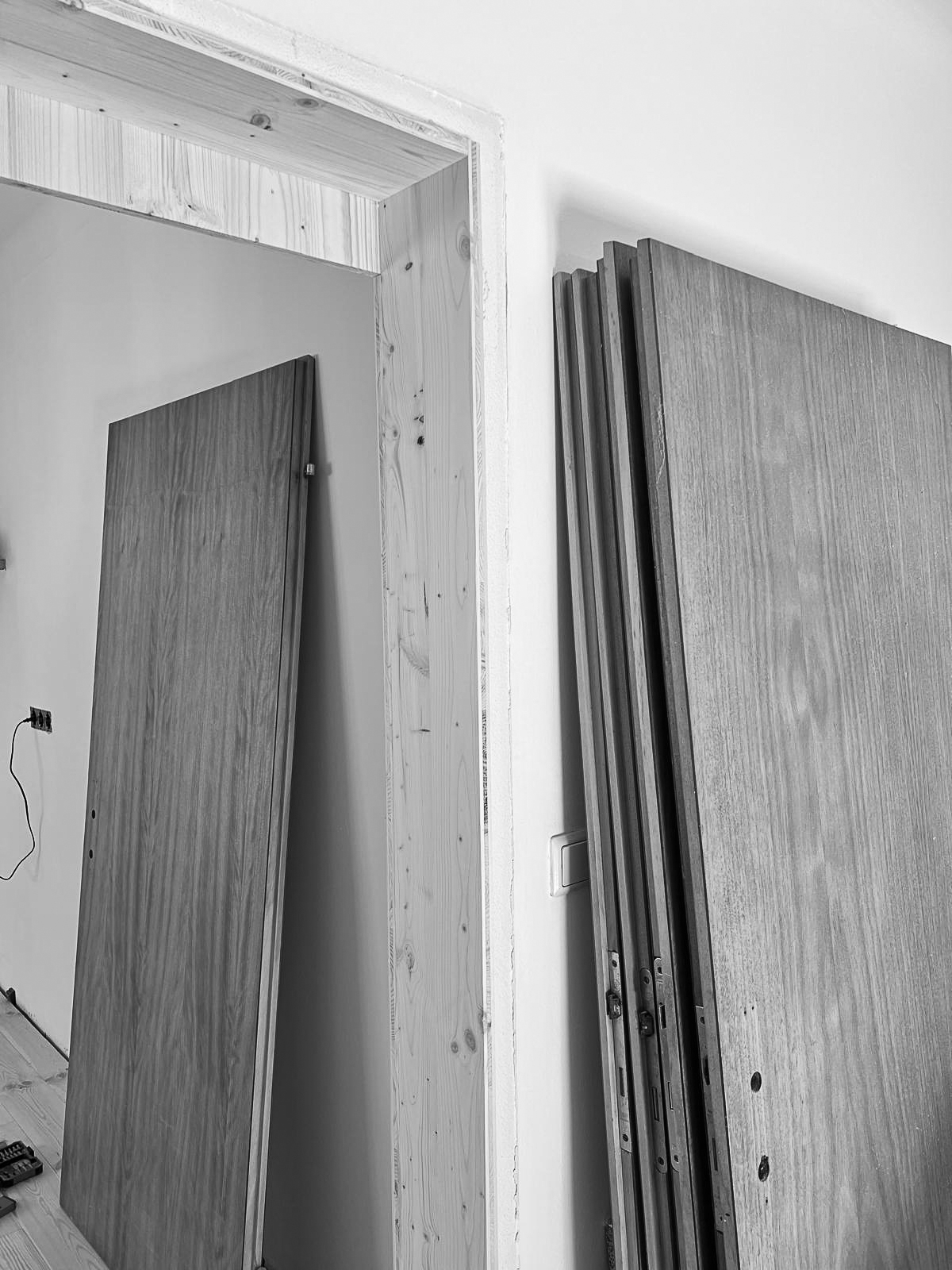
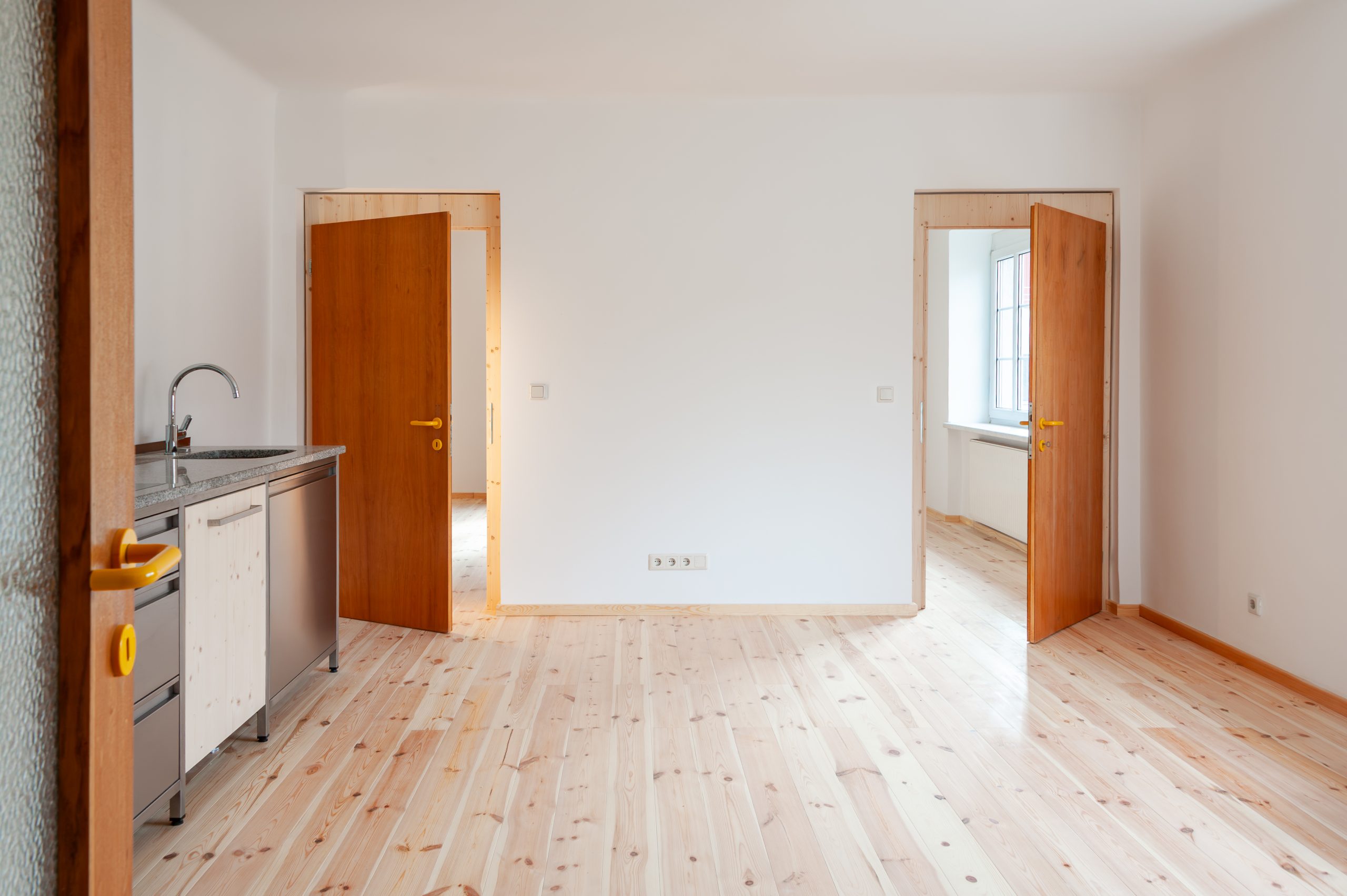
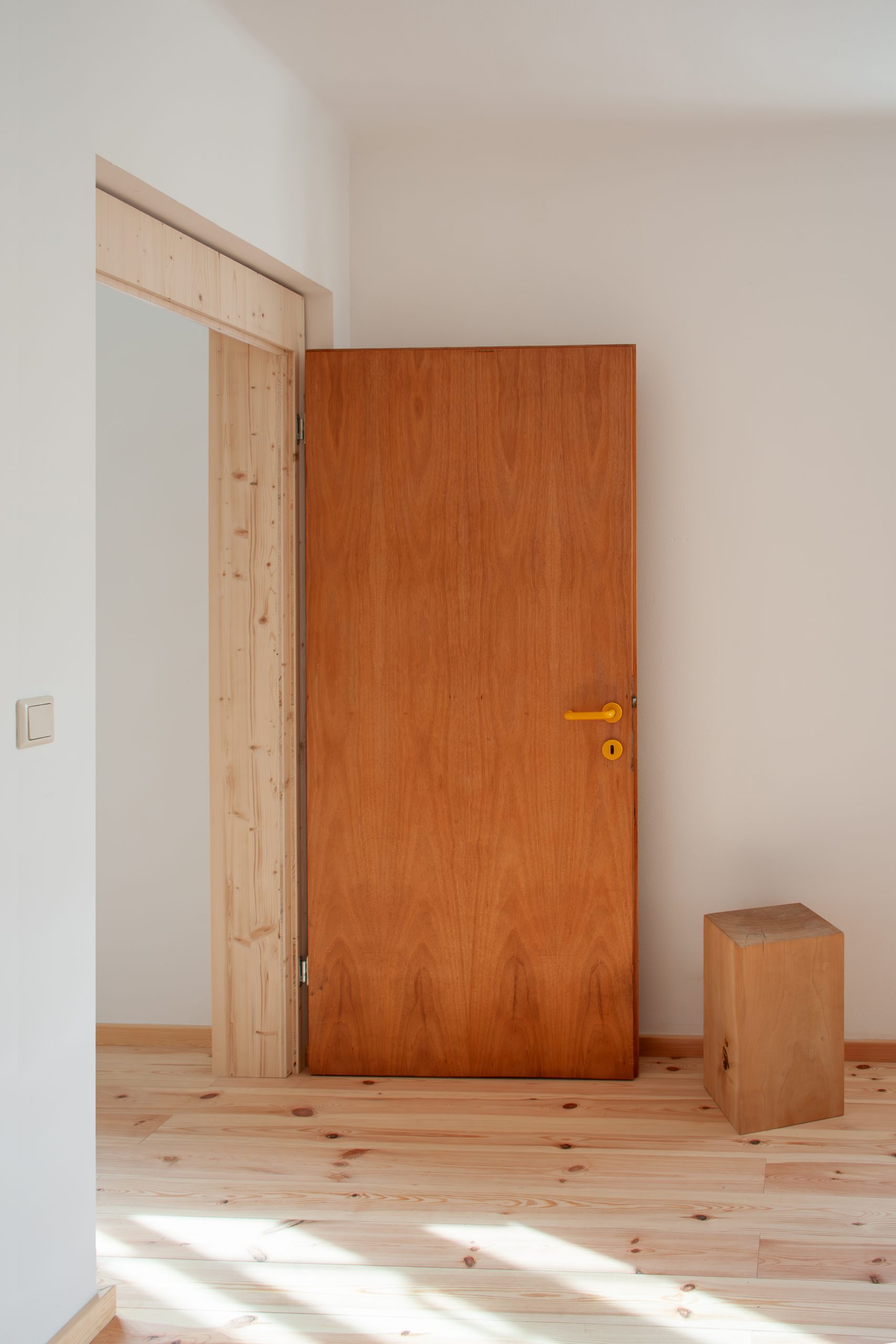
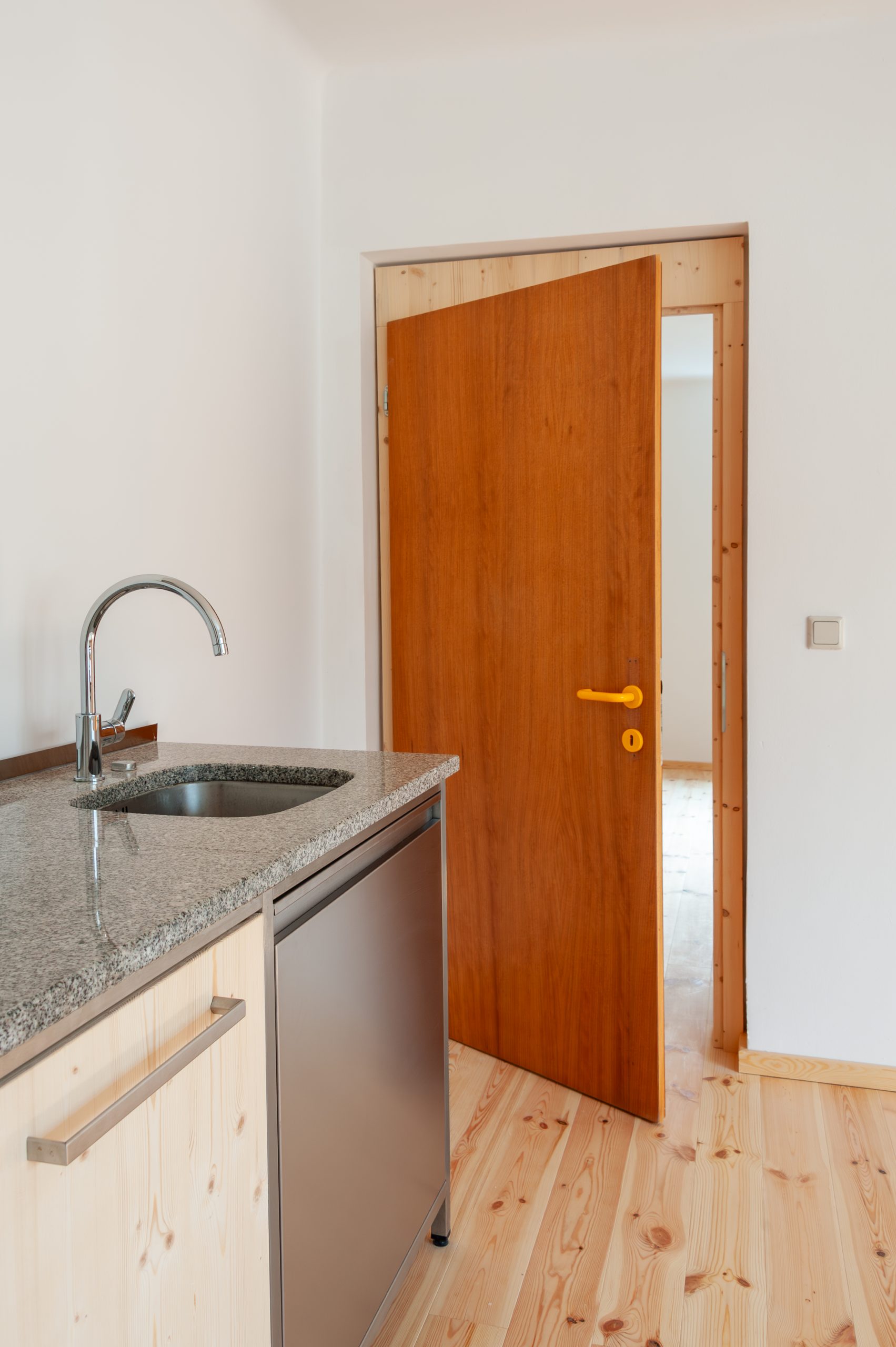
The interior doors originate from a small farmhouse in Bad Waltersdorf. Varying opening dimensions required custom-made door frames. Used door handles—matching the series of the window handles and bathroom fittings—reinforce the reuse concept. The frames were made from soaped three-layer panels; leftover pieces were reused as shelving in the rooms and bathroom. All new materials were precisely calculated to minimize waste.
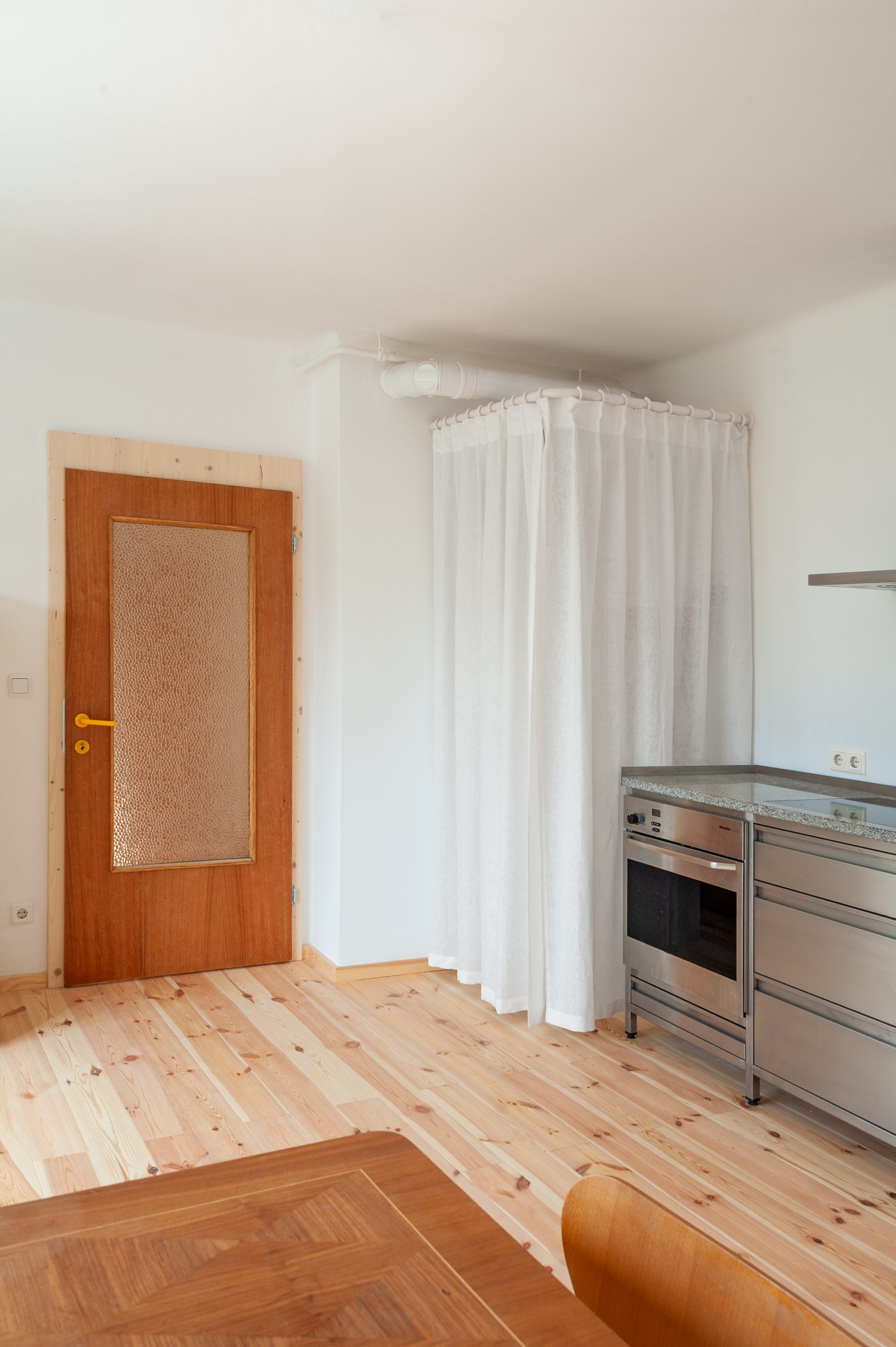
In the open-plan kitchen and dining area, the existing kitchen had to be removed: many cabinet units and fronts had not withstood years of moisture exposure and improper cleaning. However, the high-quality granite countertop and appliances were dismantled and reused in the new kitchen. The aim was to create a durable, robust kitchen with a contemporary expression. The existing stone countertop was placed on the base frame of a stainless-steel commercial kitchen unit; a 5 cm stainless-steel strip protects the wall, and the furniture is slightly offset from it.
The new floor made of oiled pine boards recalls the historic floorboards typical of this 1940s building. Softwood is more affordable but also more sensitive—an intentional choice. Signs of use are meant to remain visible. In the entrance area, a recessed coconut-fiber doormat was installed across the full width of the space, clearly separating the entry zone from the living area with its wooden flooring.
The bathroom underwent the fewest structural changes, yet experienced a strong transformation in character. The floor and wall tiles were only 15 years old and still in good condition. However, the glass shower partition was replaced with a cotton curtain, which is significantly easier to maintain in Graz’s hard, lime-rich water. The existing mirror is held by brackets from the same series as the window and door handles, as are the remaining fittings, including the shelf at the washbasin. All elements were purchased second-hand. The most significant spatial transformation resulted from coloring the tile grout in a soft pink tone, subtly yet effectively altering the room’s atmosphere.
This apartment is intended as a contribution to the question of how existing buildings can be renovated sustainably, with high quality, robustness, and affordability. The use of existing resources is not a limitation, but an opportunity to make material quality visible once again.
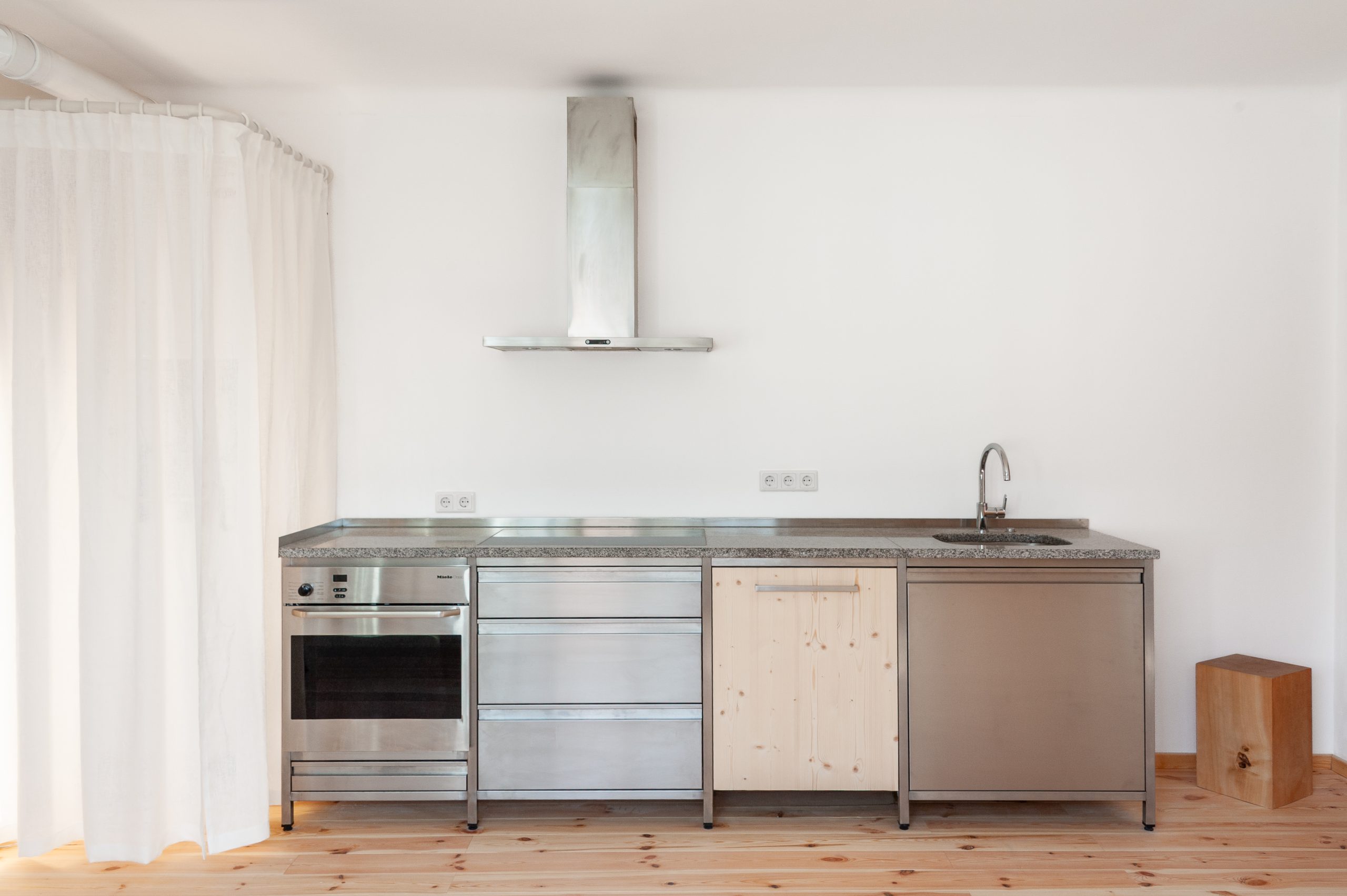
In the open-plan kitchen and dining area, the existing kitchen had to be removed: many cabinet units and fronts had not withstood years of moisture exposure and improper cleaning. However, the high-quality granite countertop and appliances were dismantled and reused in the new kitchen.
Our goal was to renovate the apartment exclusively using existing resources, complemented only by high-quality, sustainable new materials.
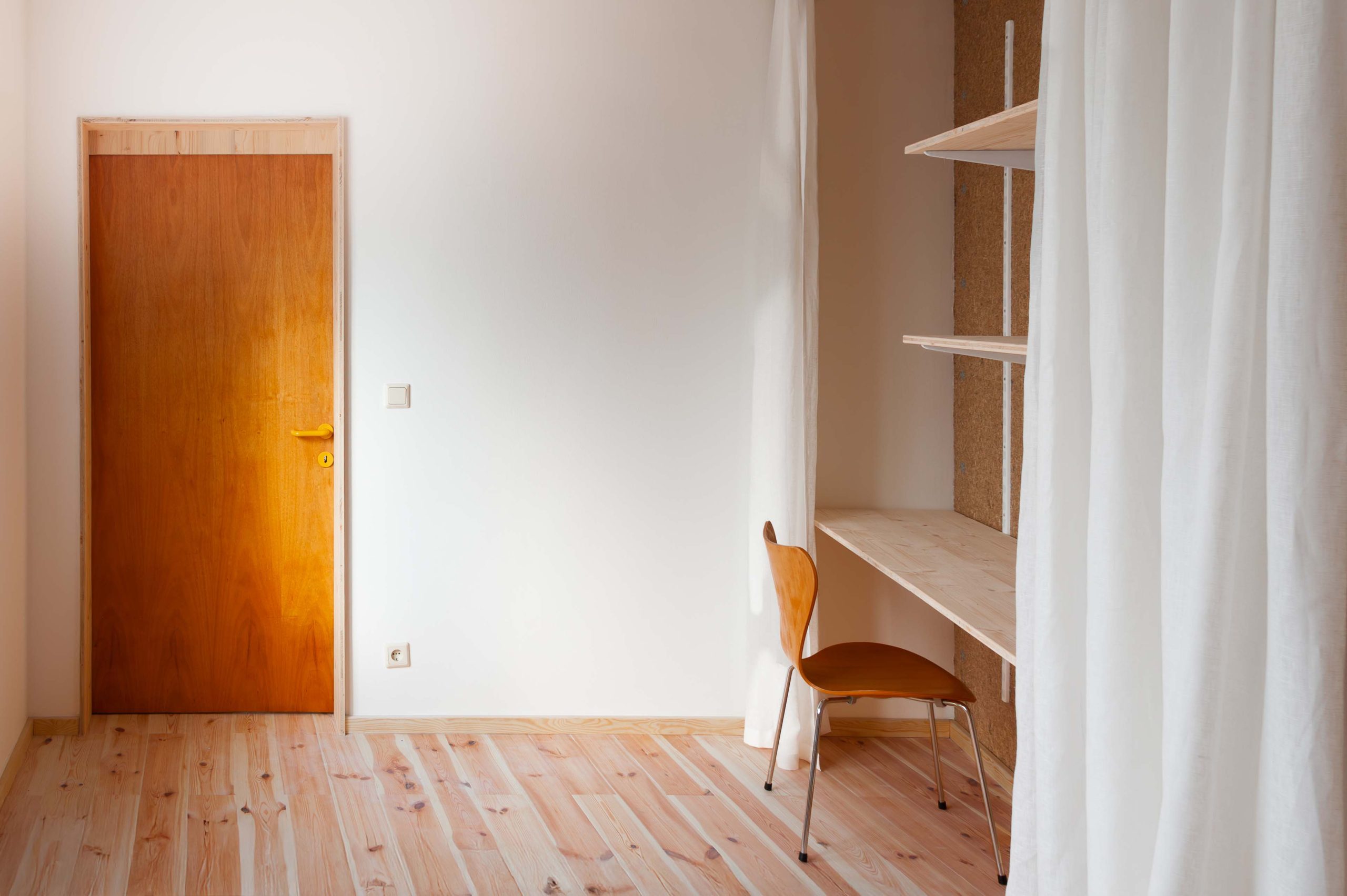
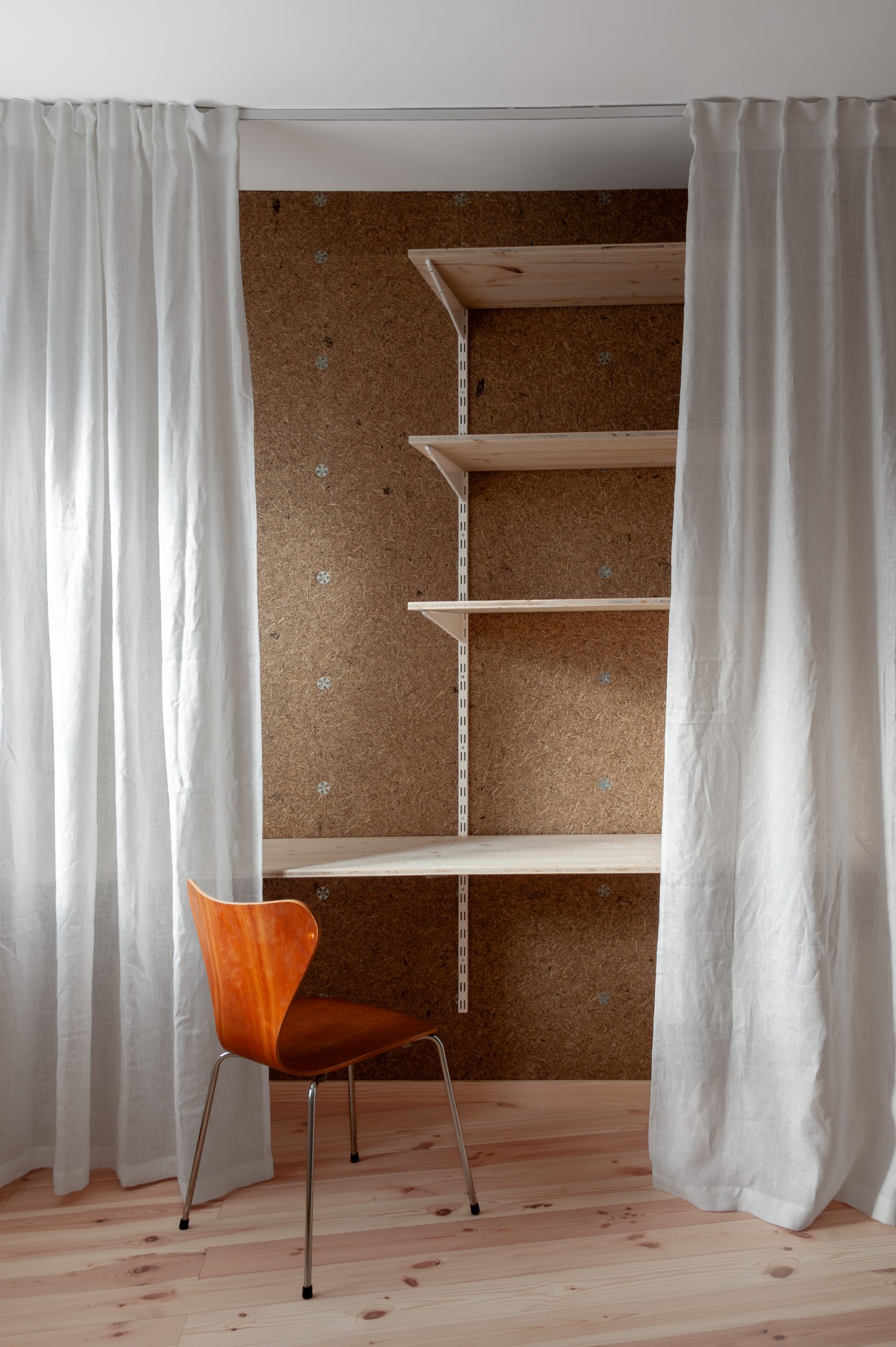
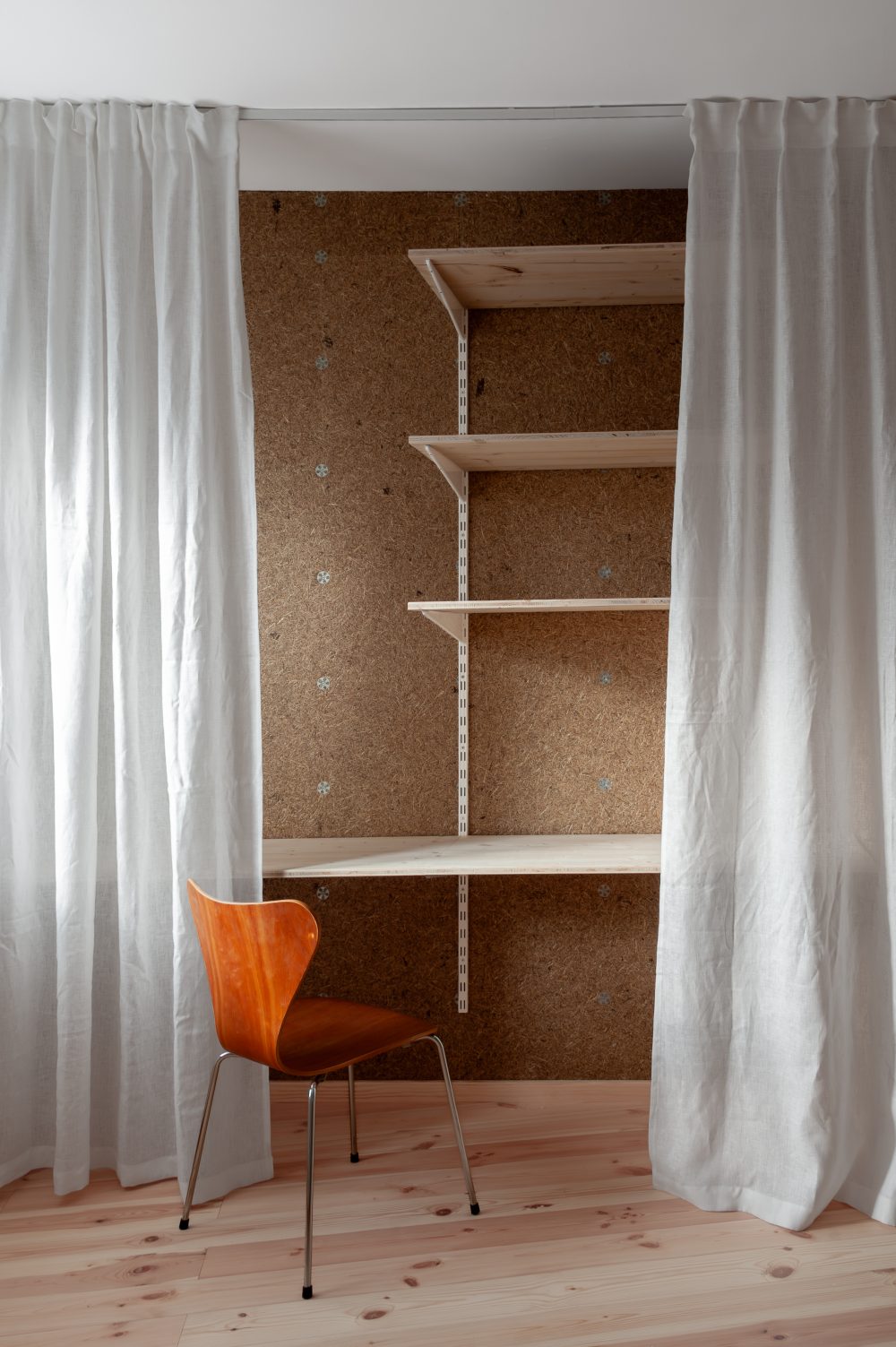
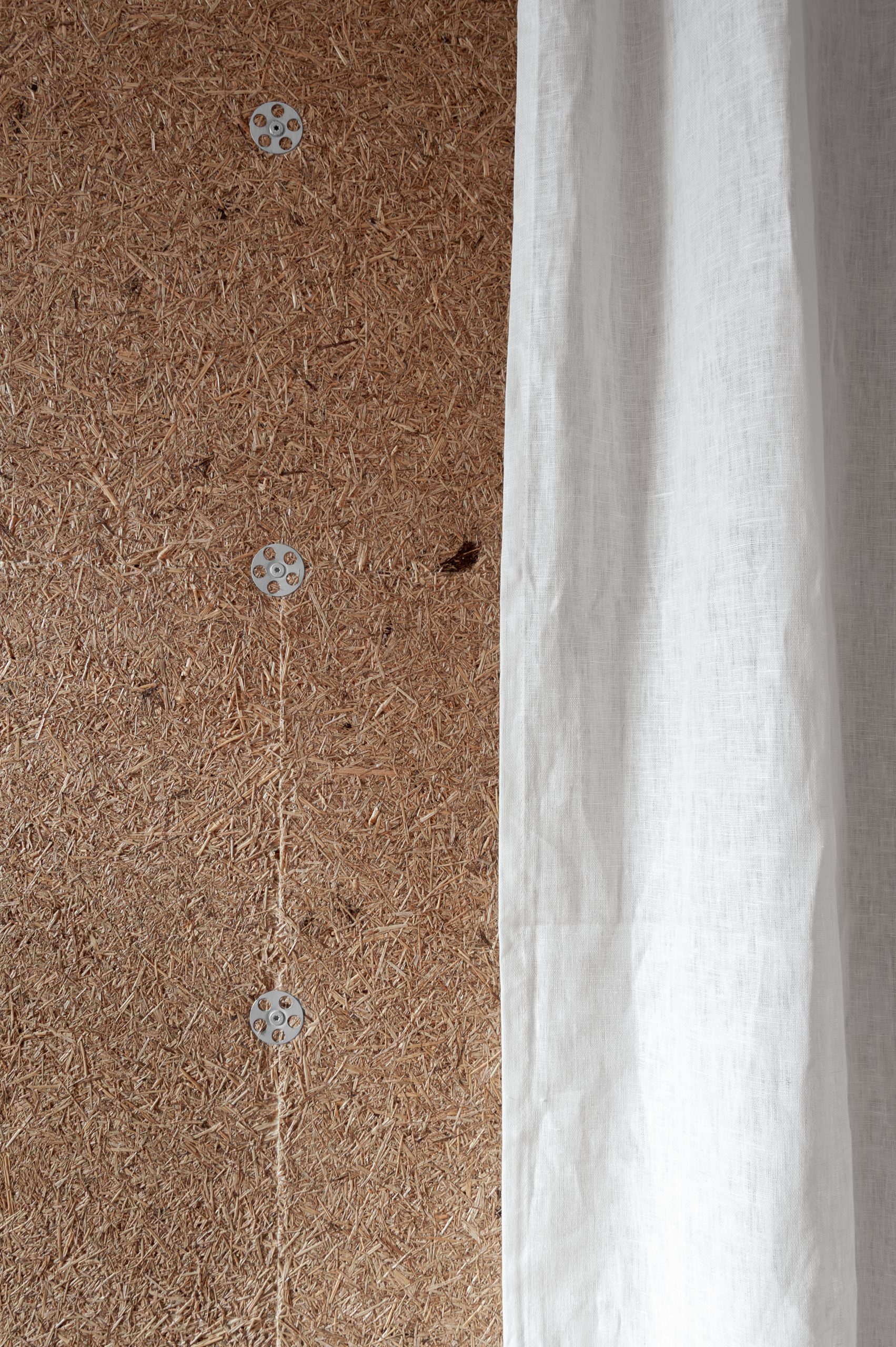
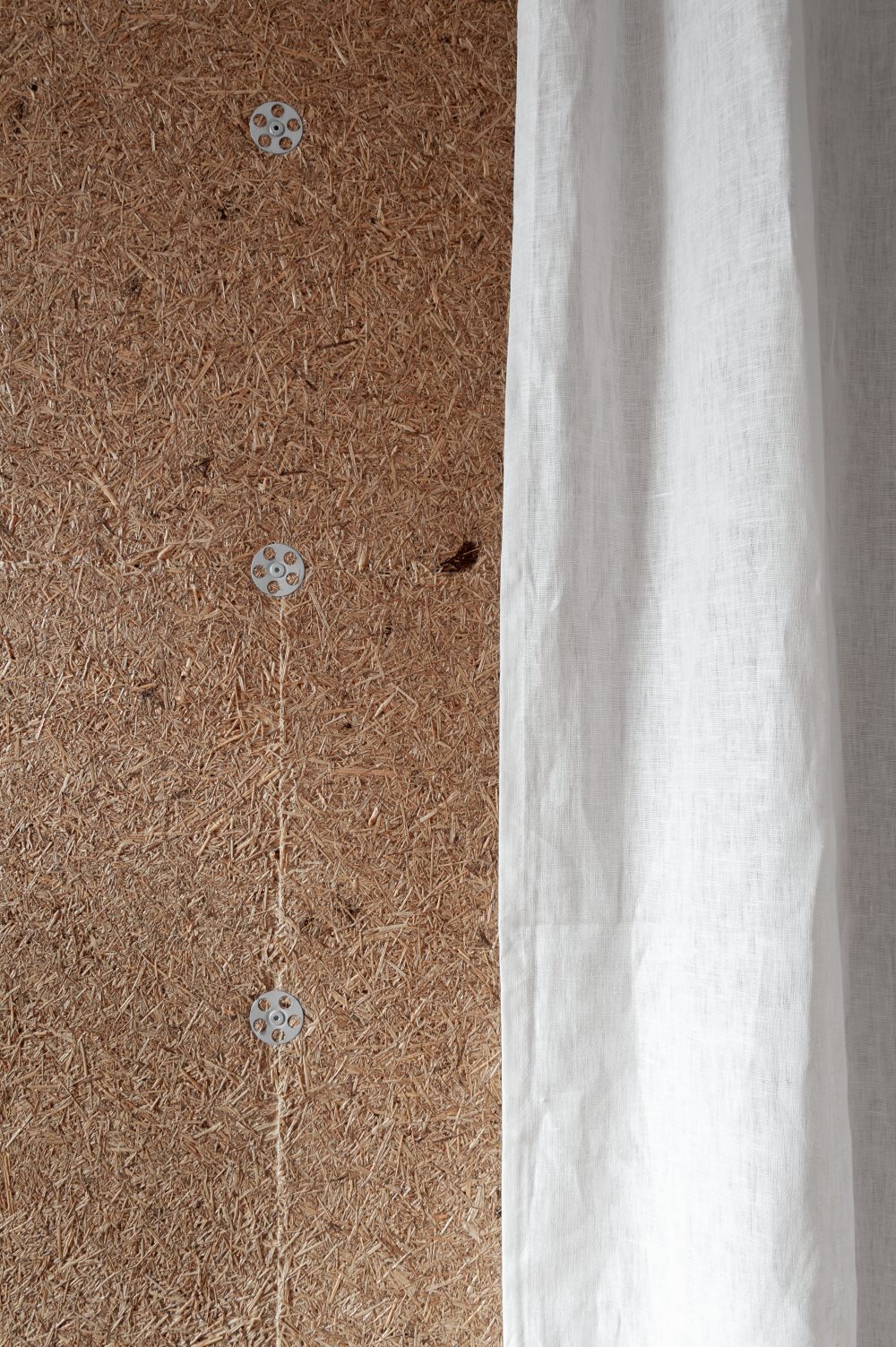
A timber frame construction insulated with sheep’s wool and clad on both sides with straw–lime panels. The surface creates a tactile and visual accent.
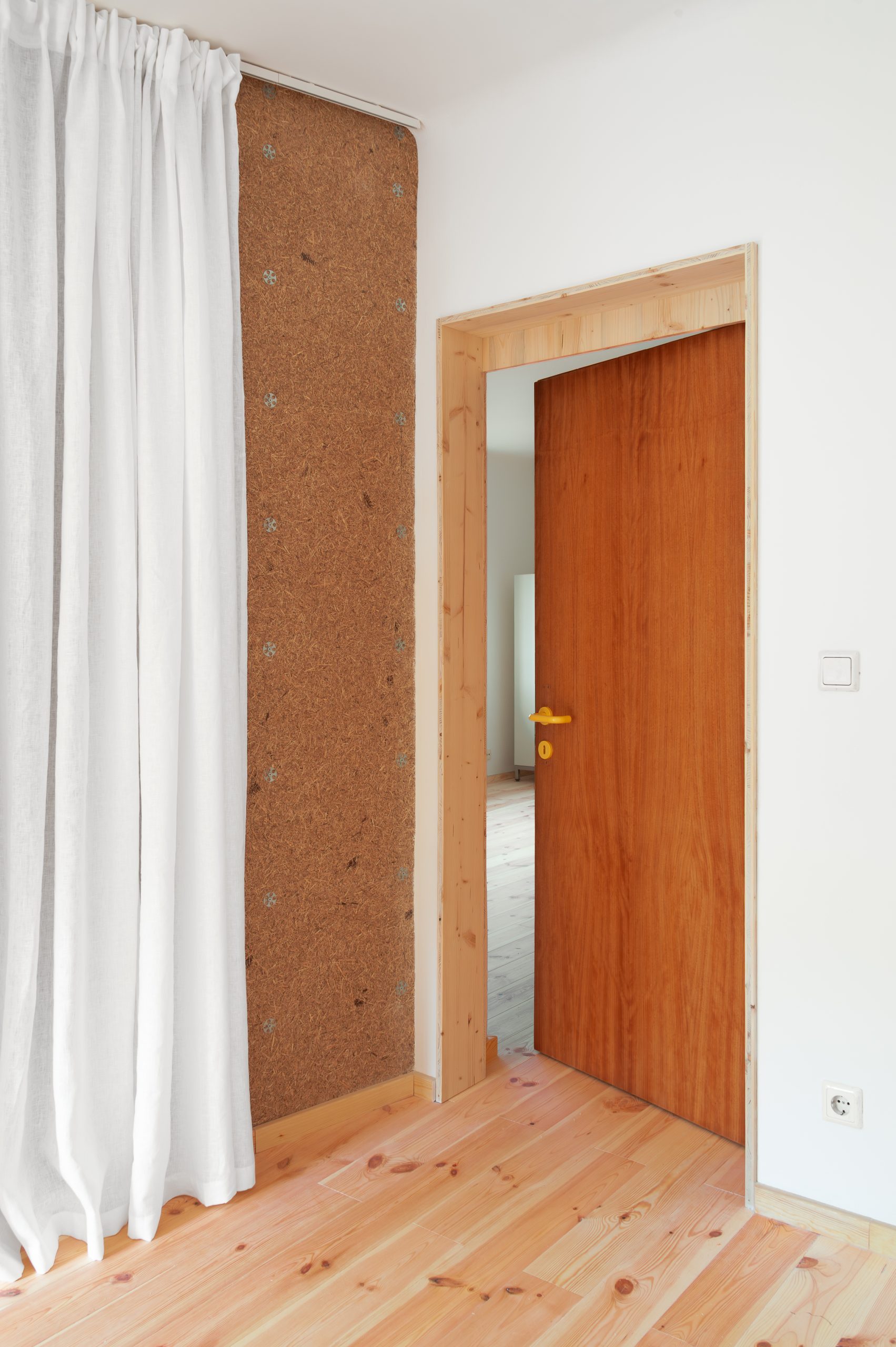
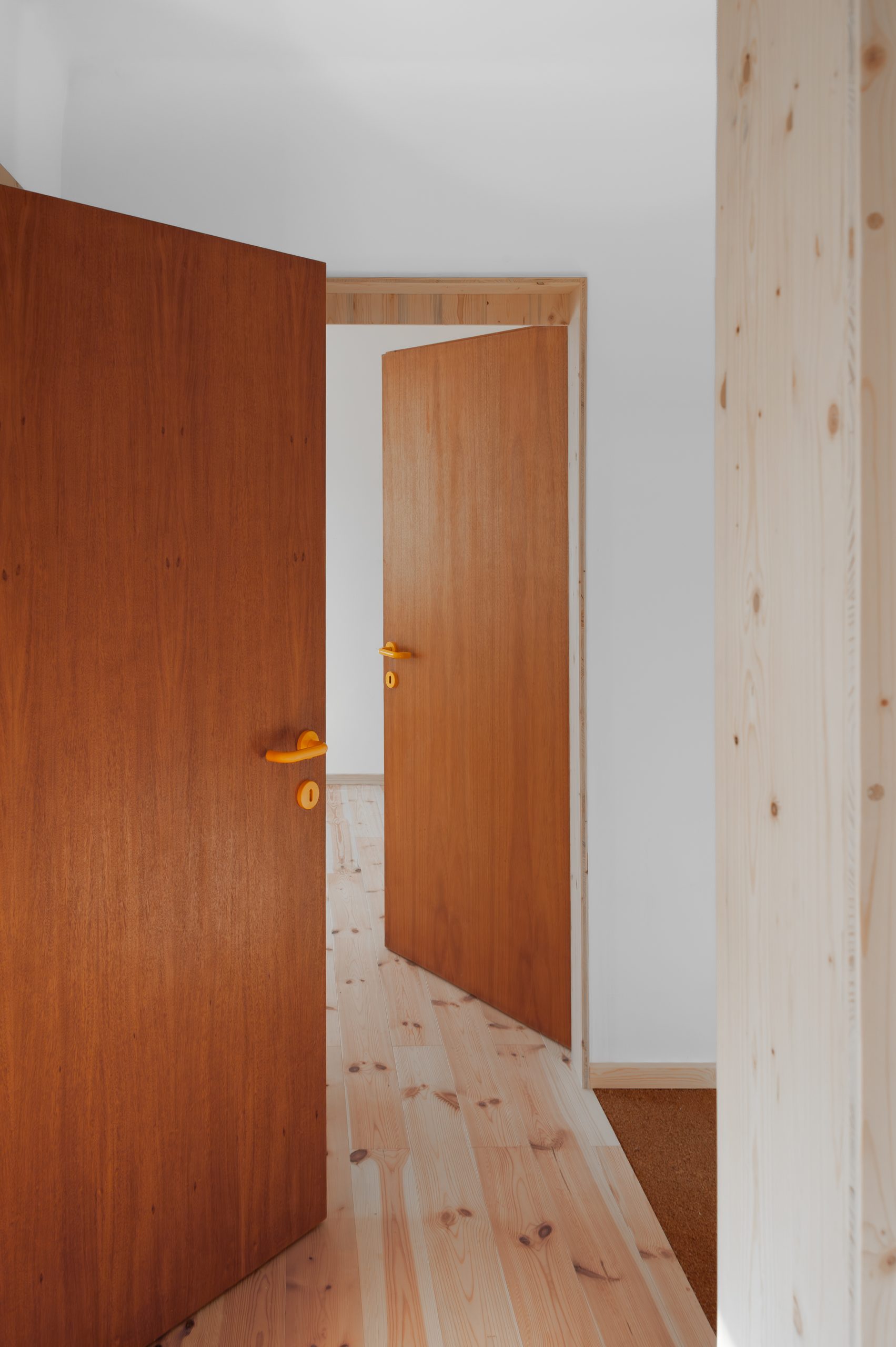
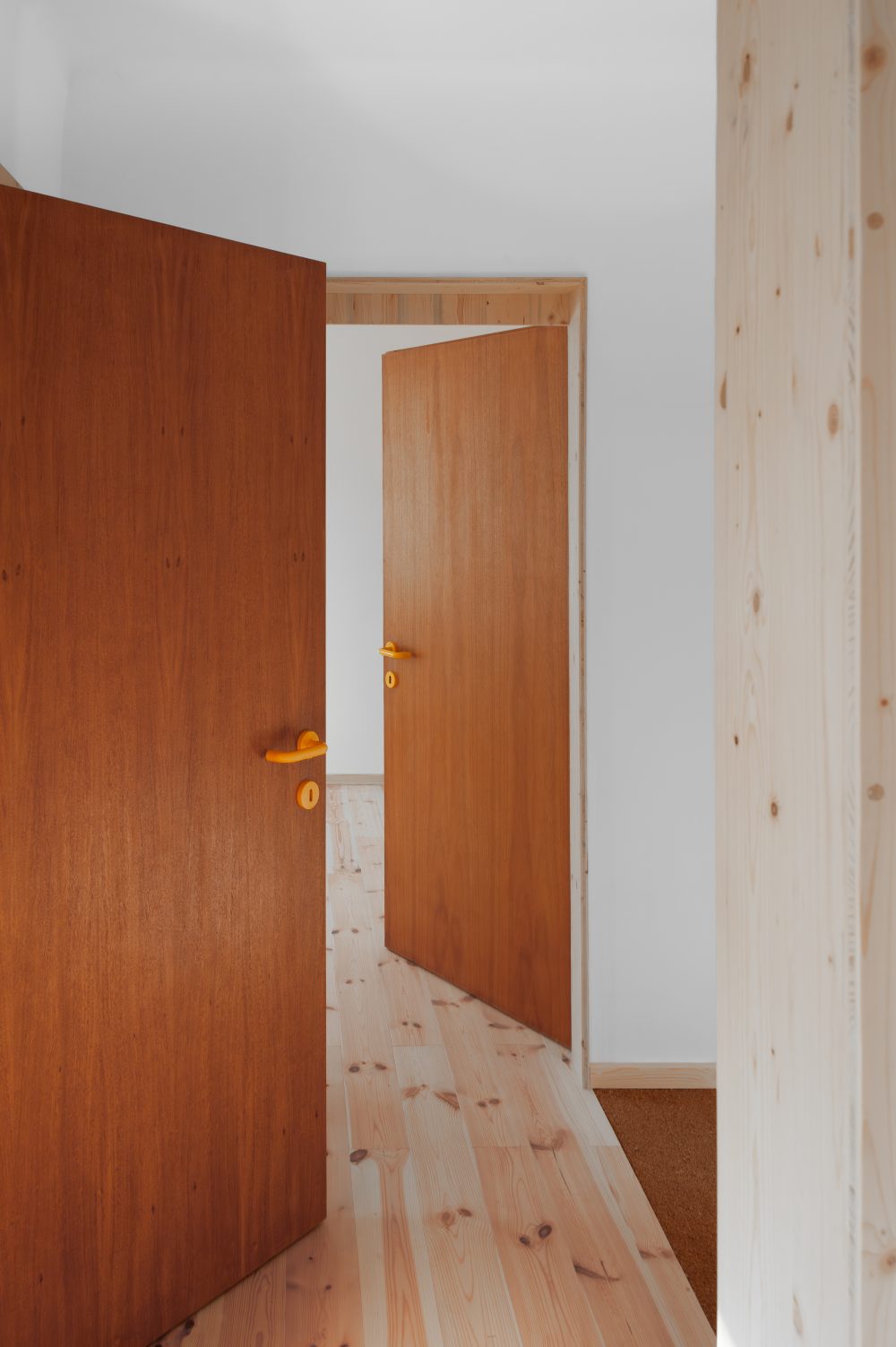
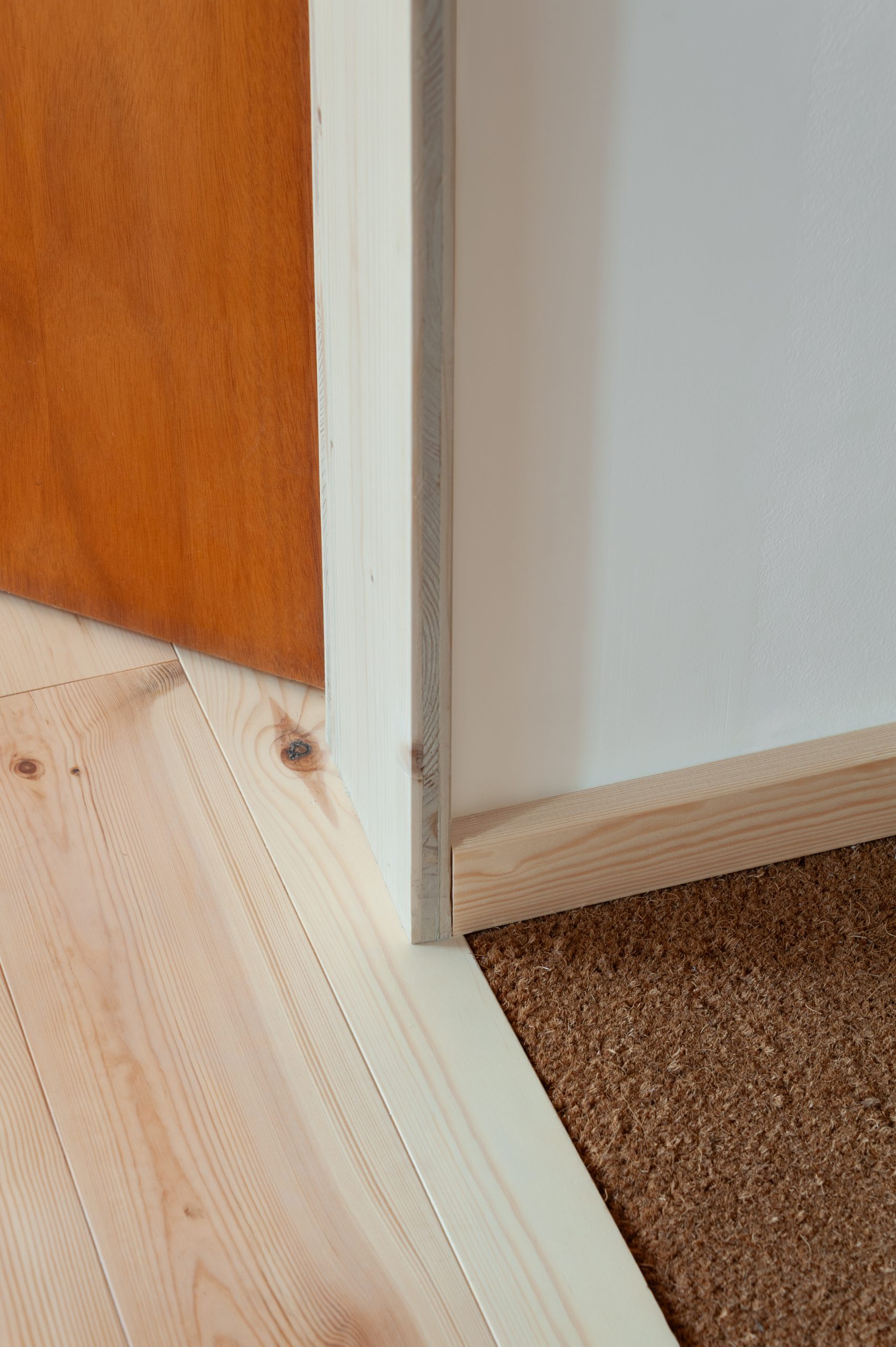
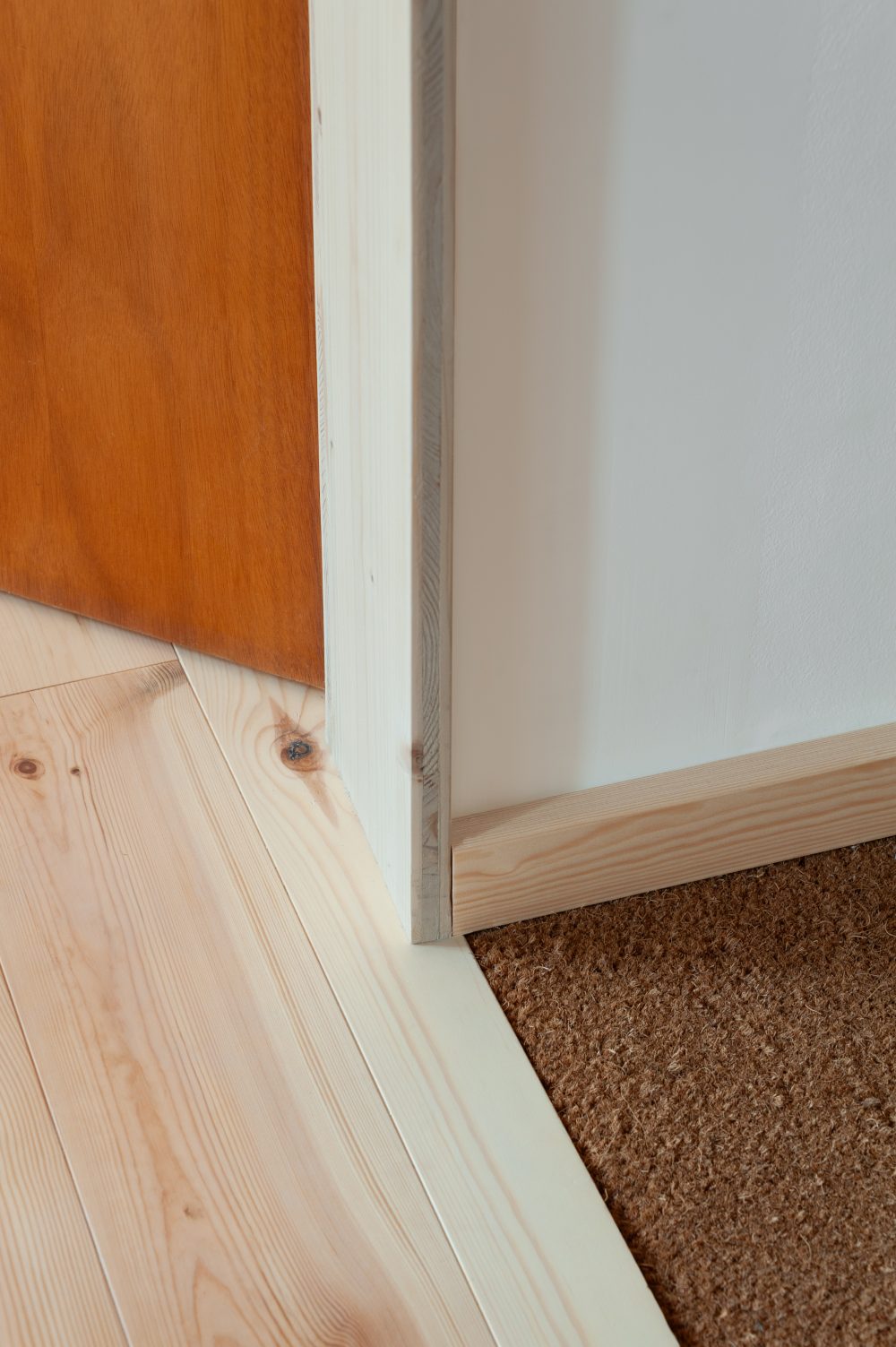
The new floor made of oiled pine boards recalls the historic floorboards typical of this 1940s building. In the entrance area, a recessed coconut-fiber doormat was installed.
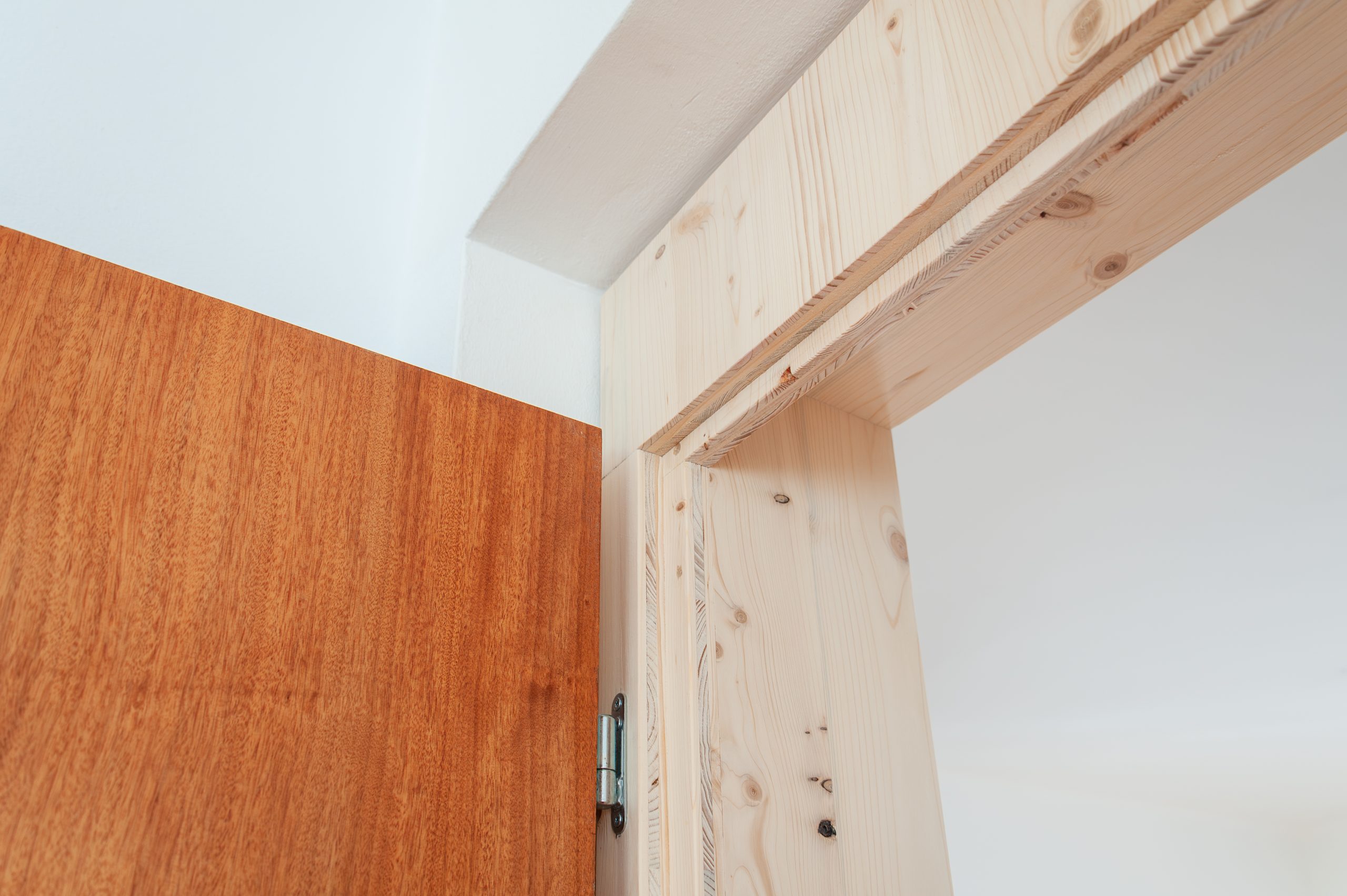
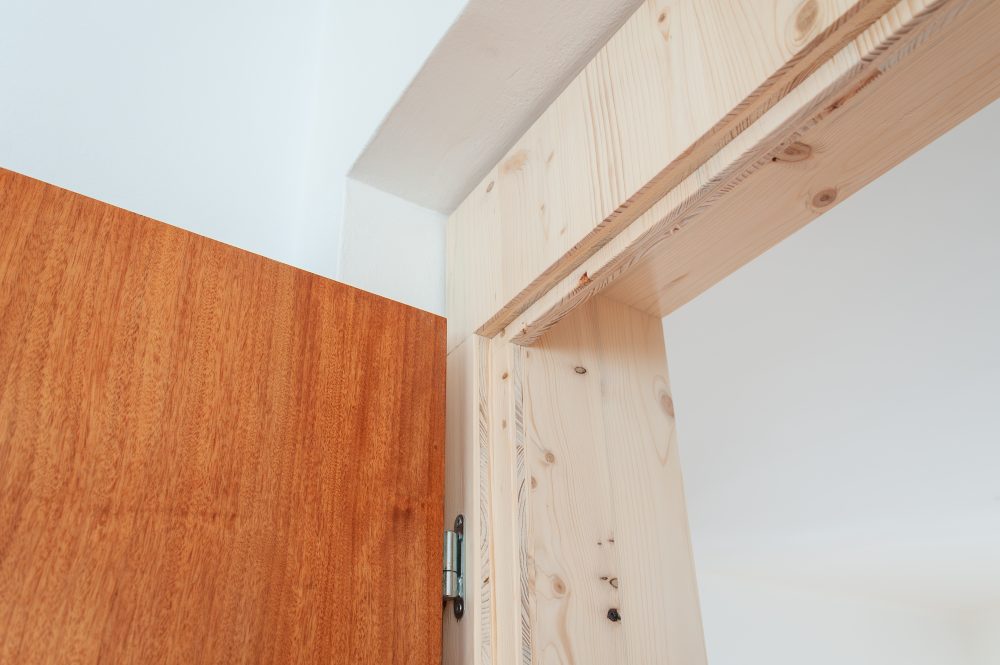
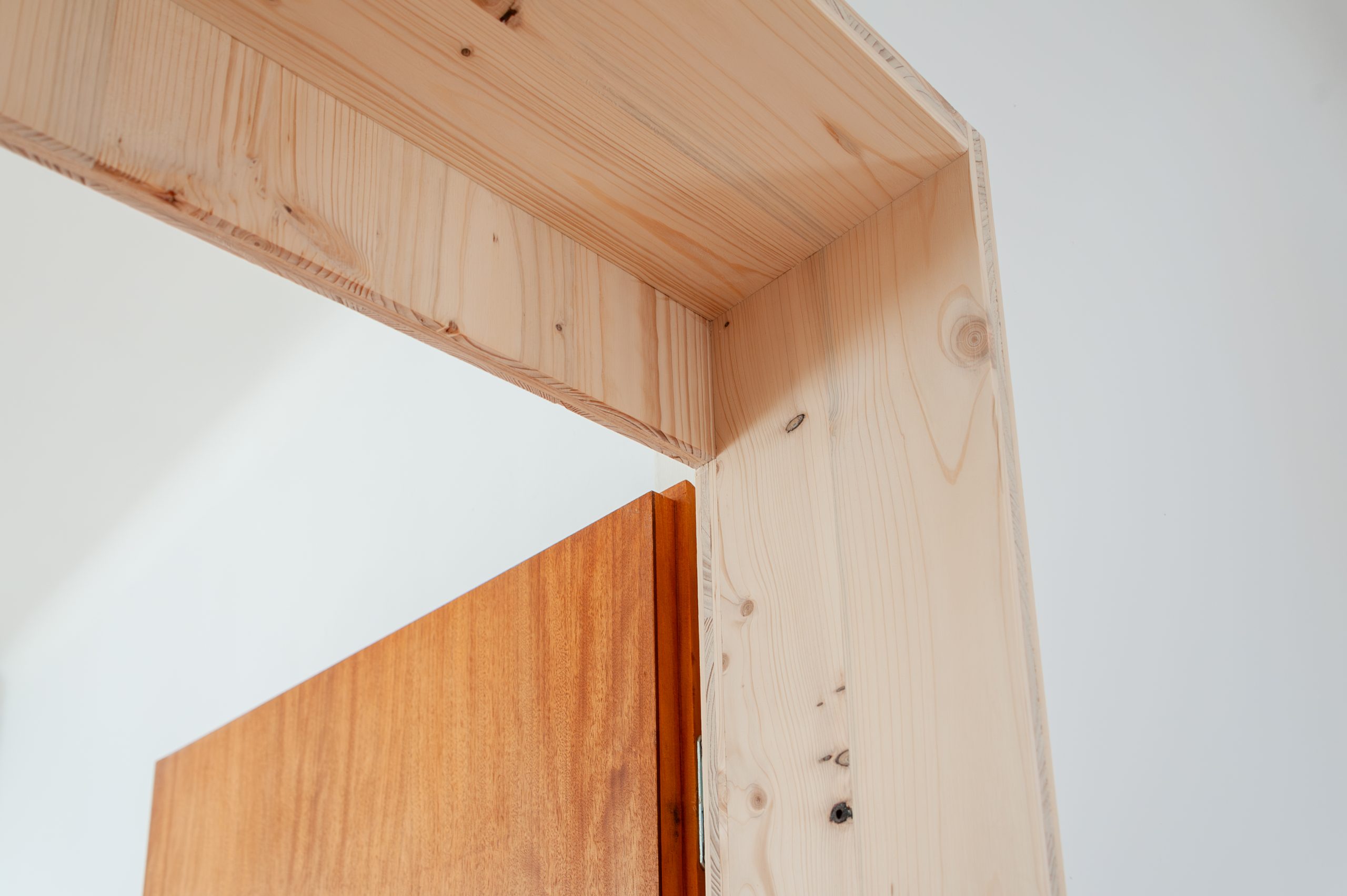
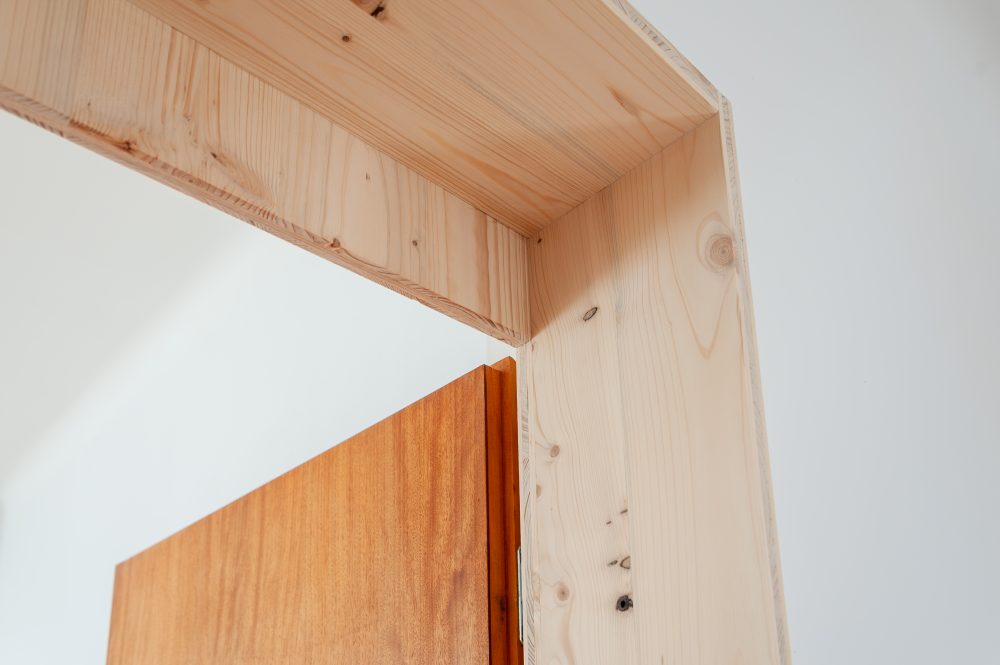
The interior doors originate from a small farmhouse in Bad Waltersdorf. Varying opening dimensions required custom-made door frames.
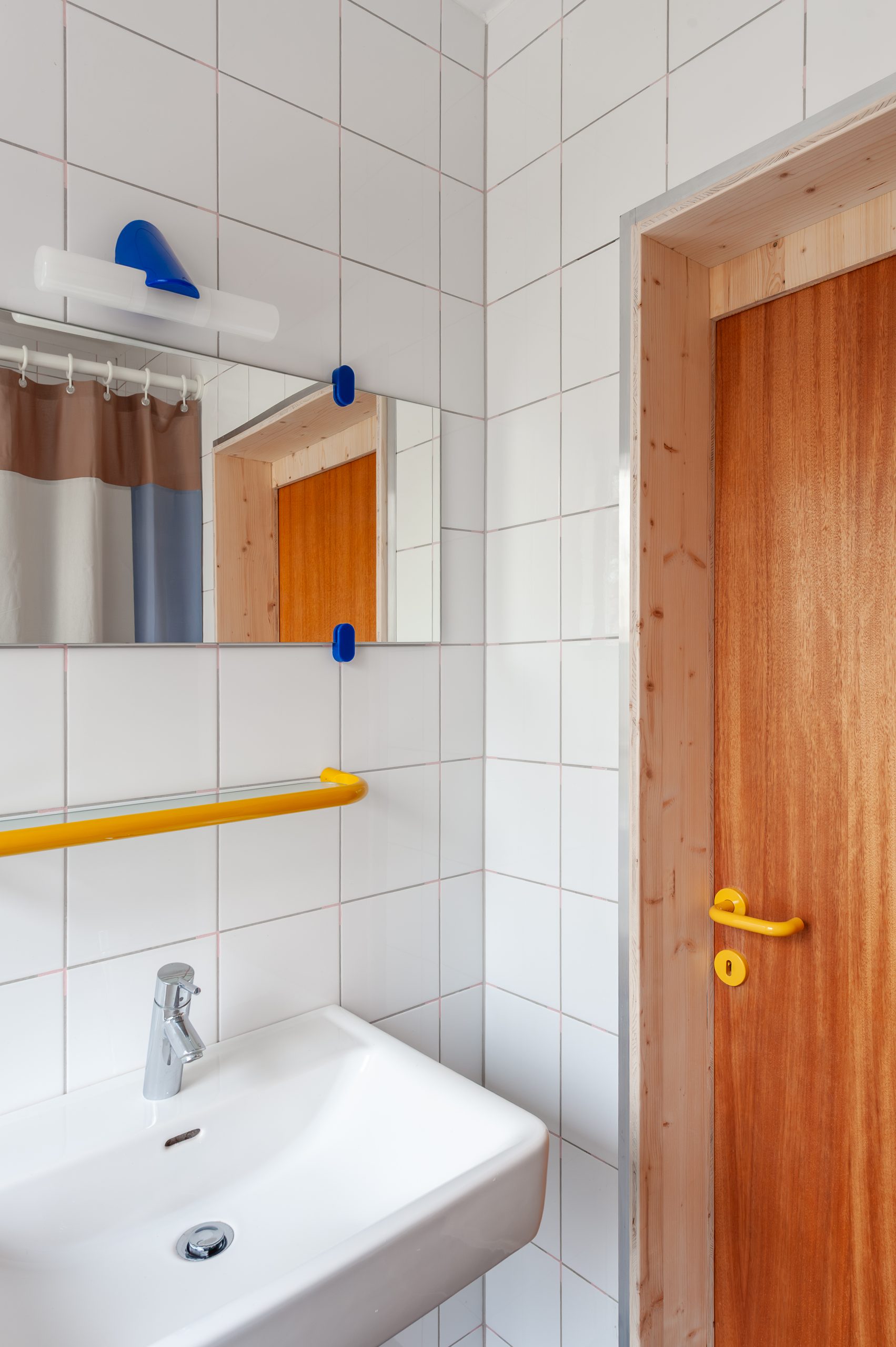
The most significant spatial transformation resulted from coloring the tile grout in a soft pink tone, subtly yet effectively altering the room’s atmosphere.
Project stages: