PHYSIOTHERAPY PRACTICE
Type: healthcare facility
Category: interior architecture and design
Year: 2025
Photography: Matej Hakar
Client: Physio im Grätzel
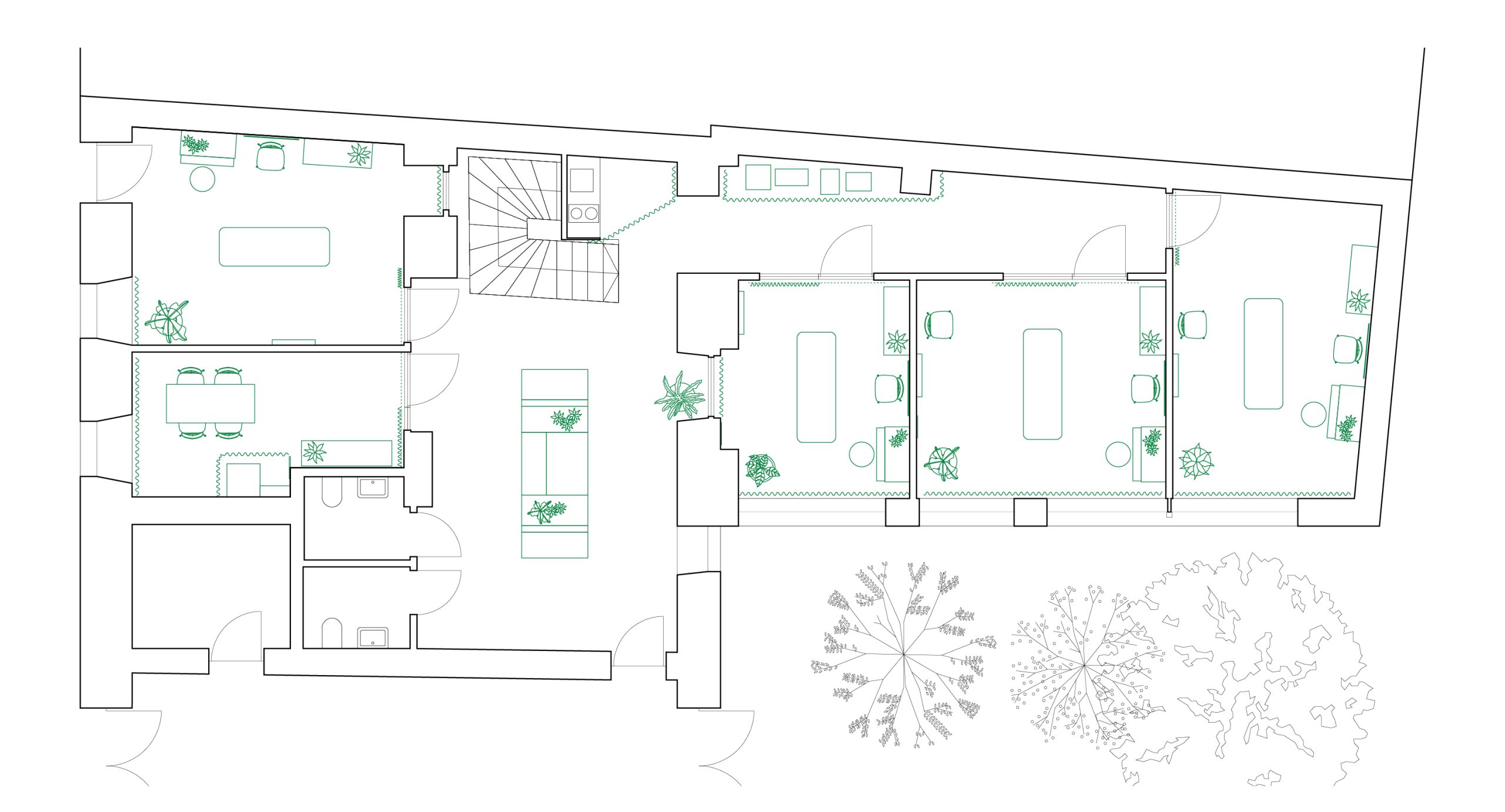
A team of young physiotherapists approached us early in the project, allowing us to evaluate, together with the property management, whether the existing floor plan could accommodate their needs even before the lease was finalized. The brief was clear: four individually accessible treatment rooms, a bright waiting area, and a calm, private atmosphere.
The unit’s barrier-free ground-floor location, oriented toward a green inner courtyard, provided favorable conditions, but also presented a challenge: limited natural daylight, particularly during the winter months. Light therefore played a central role from the outset.
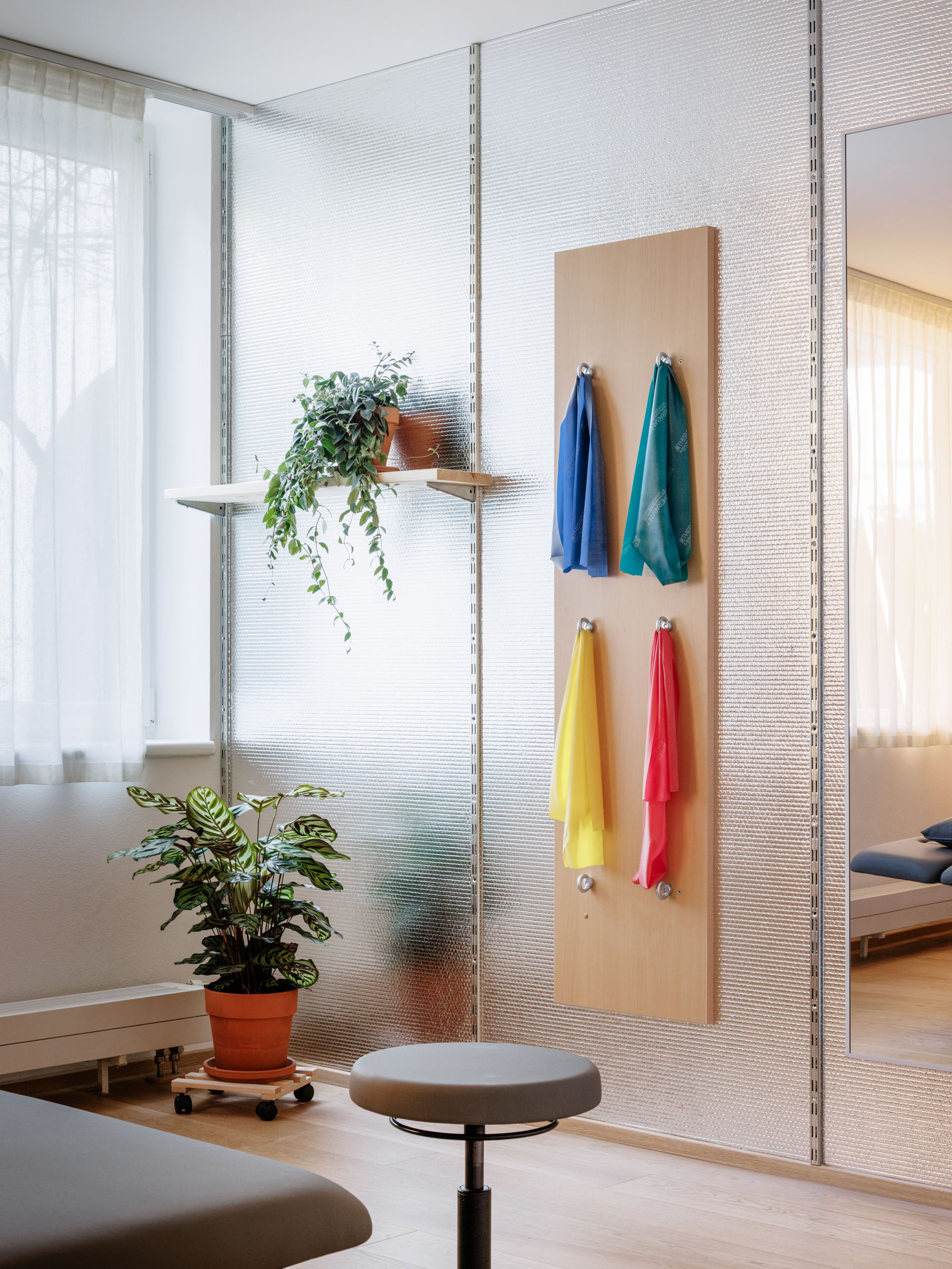
In each treatment room, a silver reflective foil was applied to one wall, distributing and amplifying the available light through reflection. Glazed openings between treatment rooms, corridor, and waiting area allow daylight to reach even the interior zones.
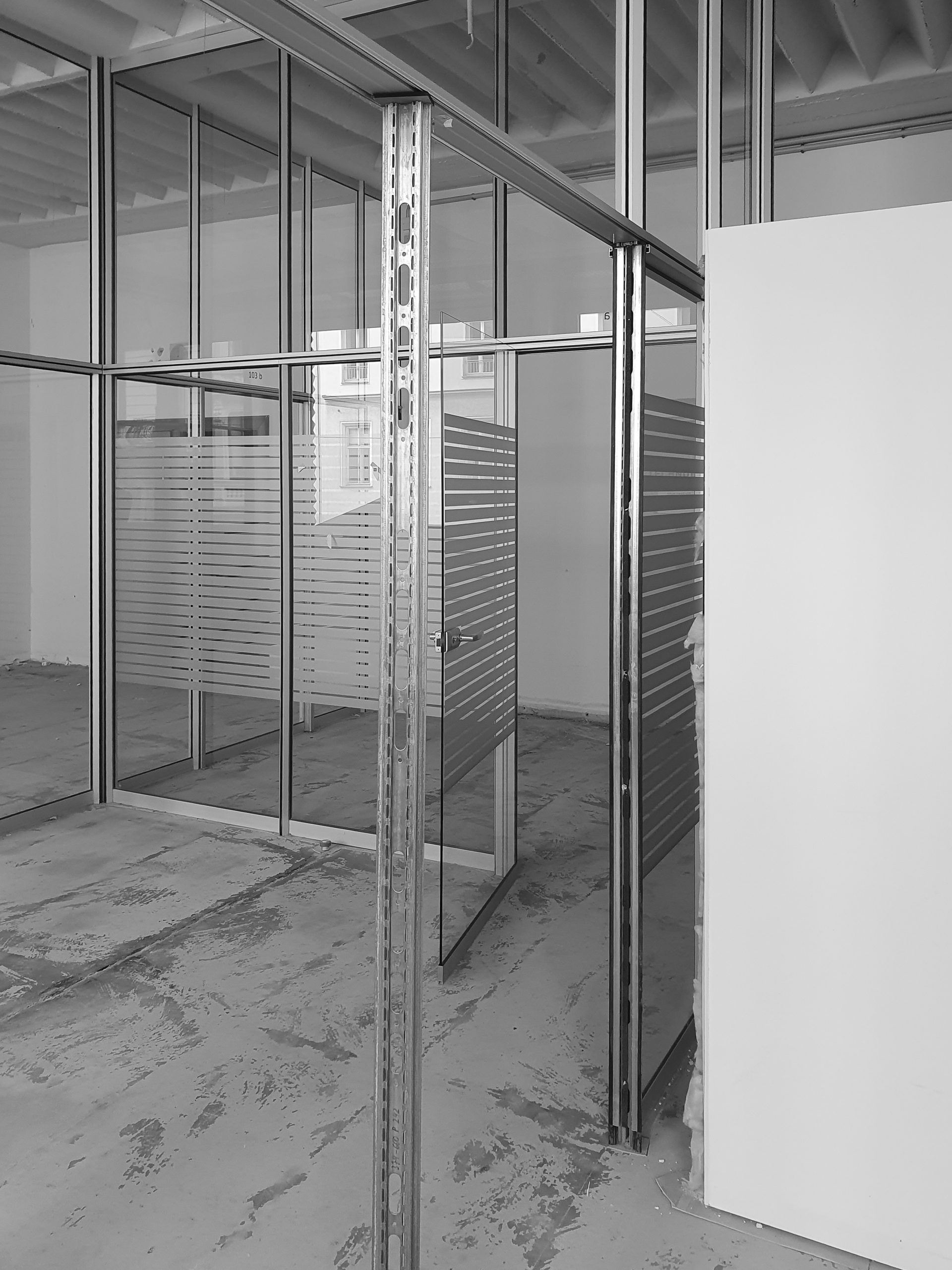
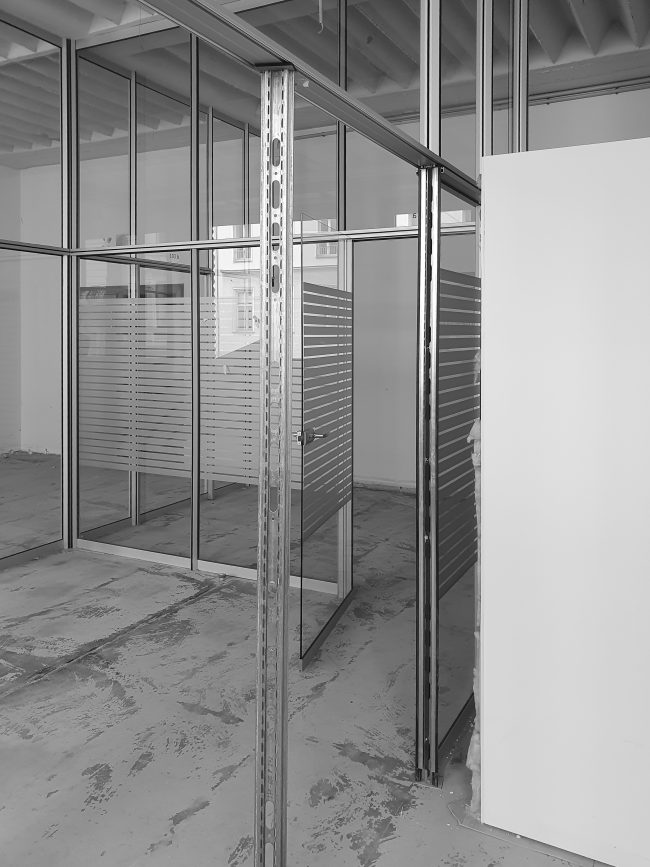
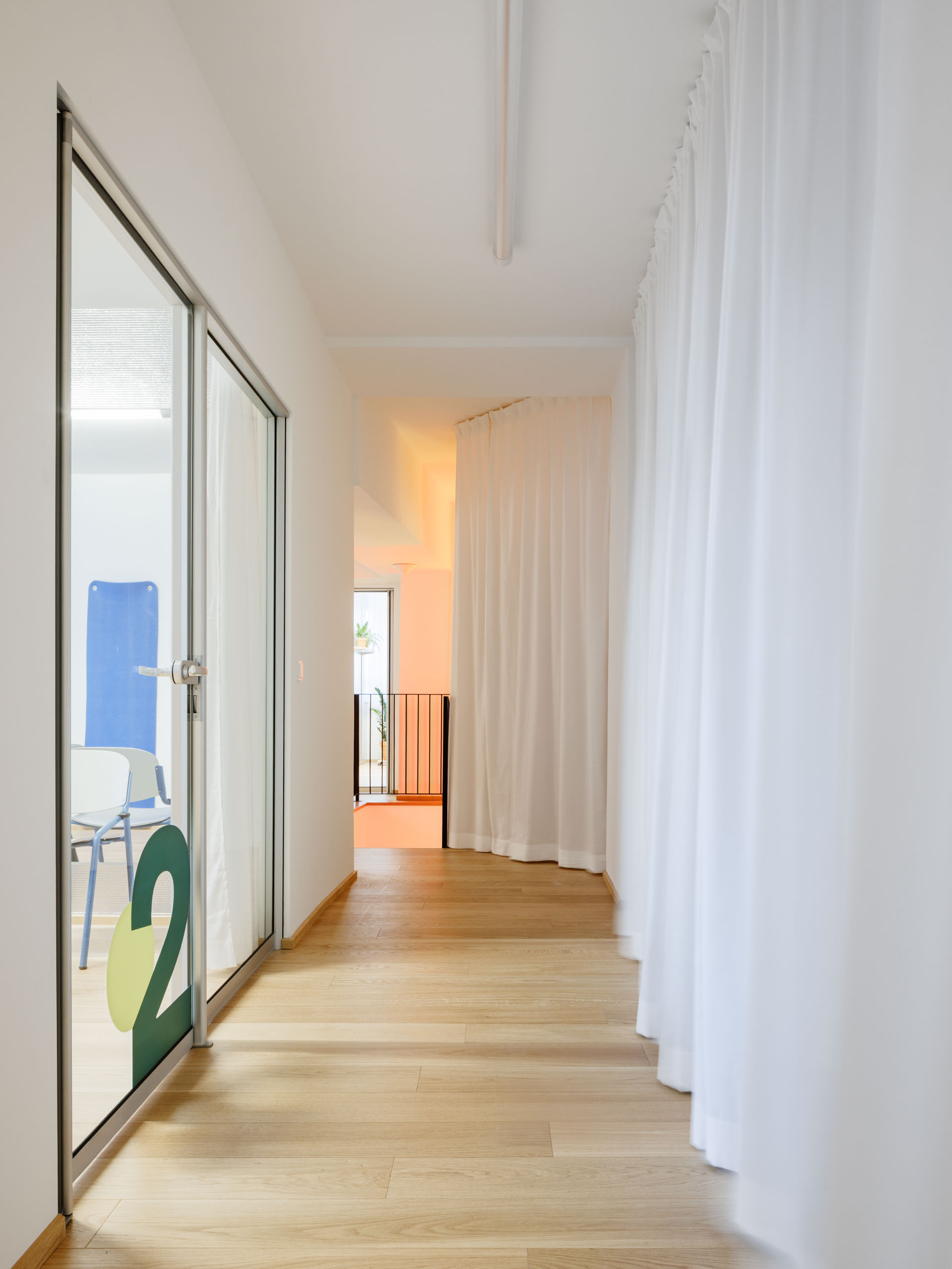
A key element of the project is the reuse of large-format glass walls and doors by Bene from a former Workers’ Chamber school on Plößlgasse. The structural openings had to be precisely aligned with the existing glass elements—a particular challenge for the construction team.
To ensure patient privacy, all glazed elements were fitted with light-colored curtains, enabling controlled views while directing daylight into circulation areas.
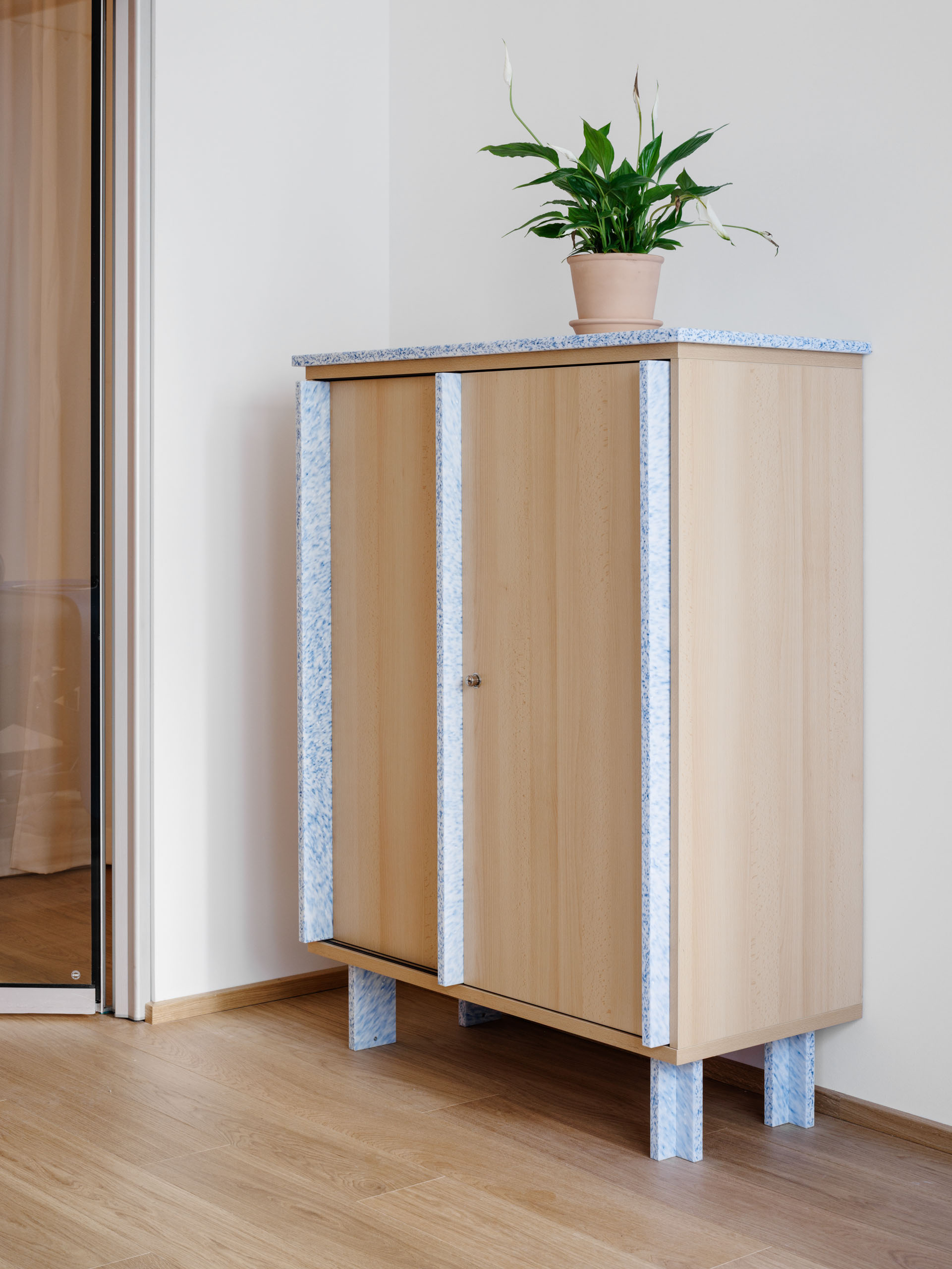
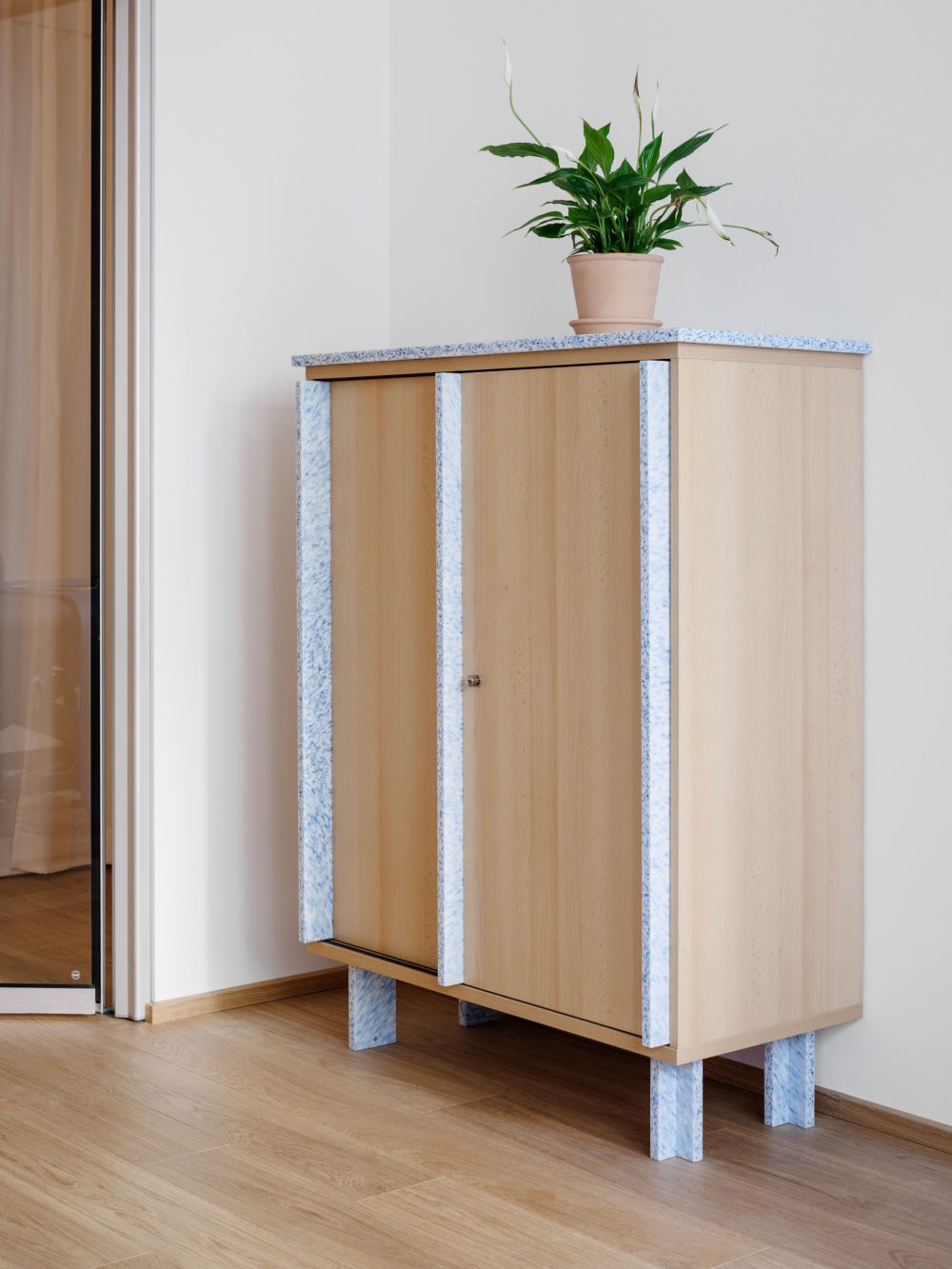
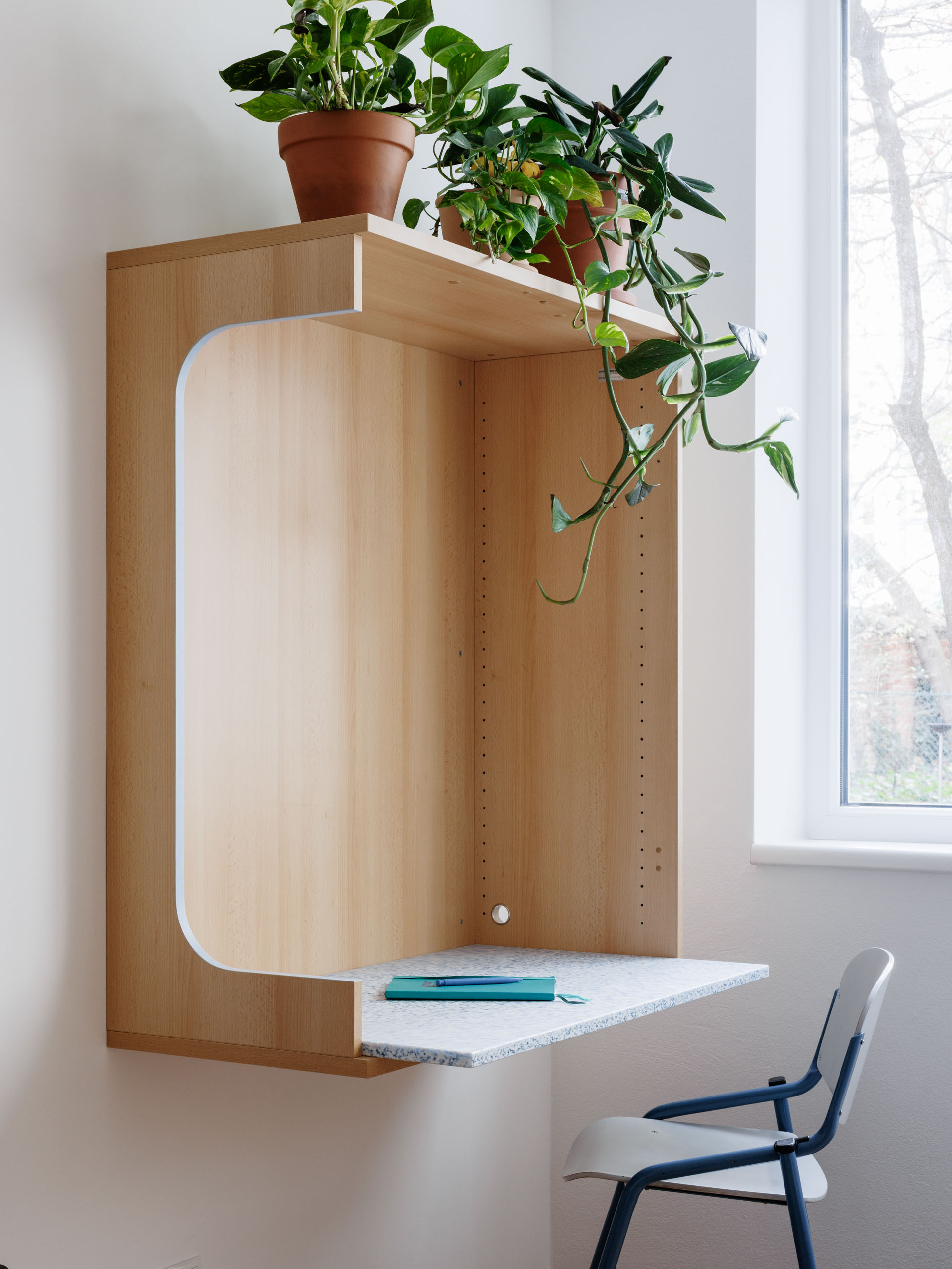
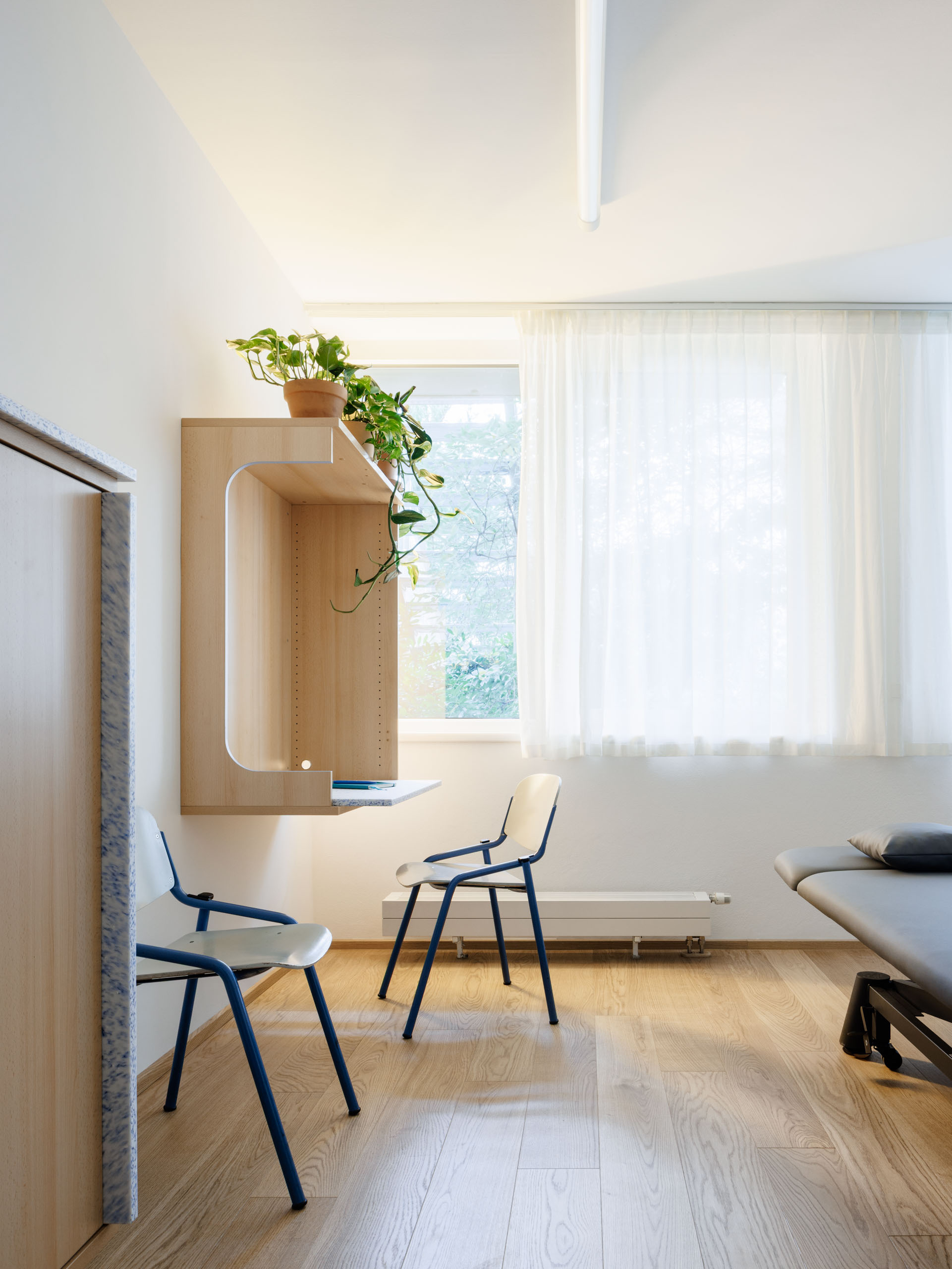
The circular approach continues in the furniture concept. Used cabinets, chairs, and shelving units were reused and reinterpreted. In the treatment rooms, old shelving units were converted into desks and complemented by work surfaces made of recycled plastic by Fantoplast, produced in a custom white-and-blue color blend. One side of each desk was opened to facilitate conversations at eye level between therapists and patients. Existing cabinets were fitted with new T-shaped legs, handles, and tops made from the same recycled material.
The reflective foil marks the more active therapy zone in each room and is framed by galvanized shelving rails, which also serve as flexible supports for additional storage. Training bands mounted on old, unused tabletops and a mirror complete the functional setup.
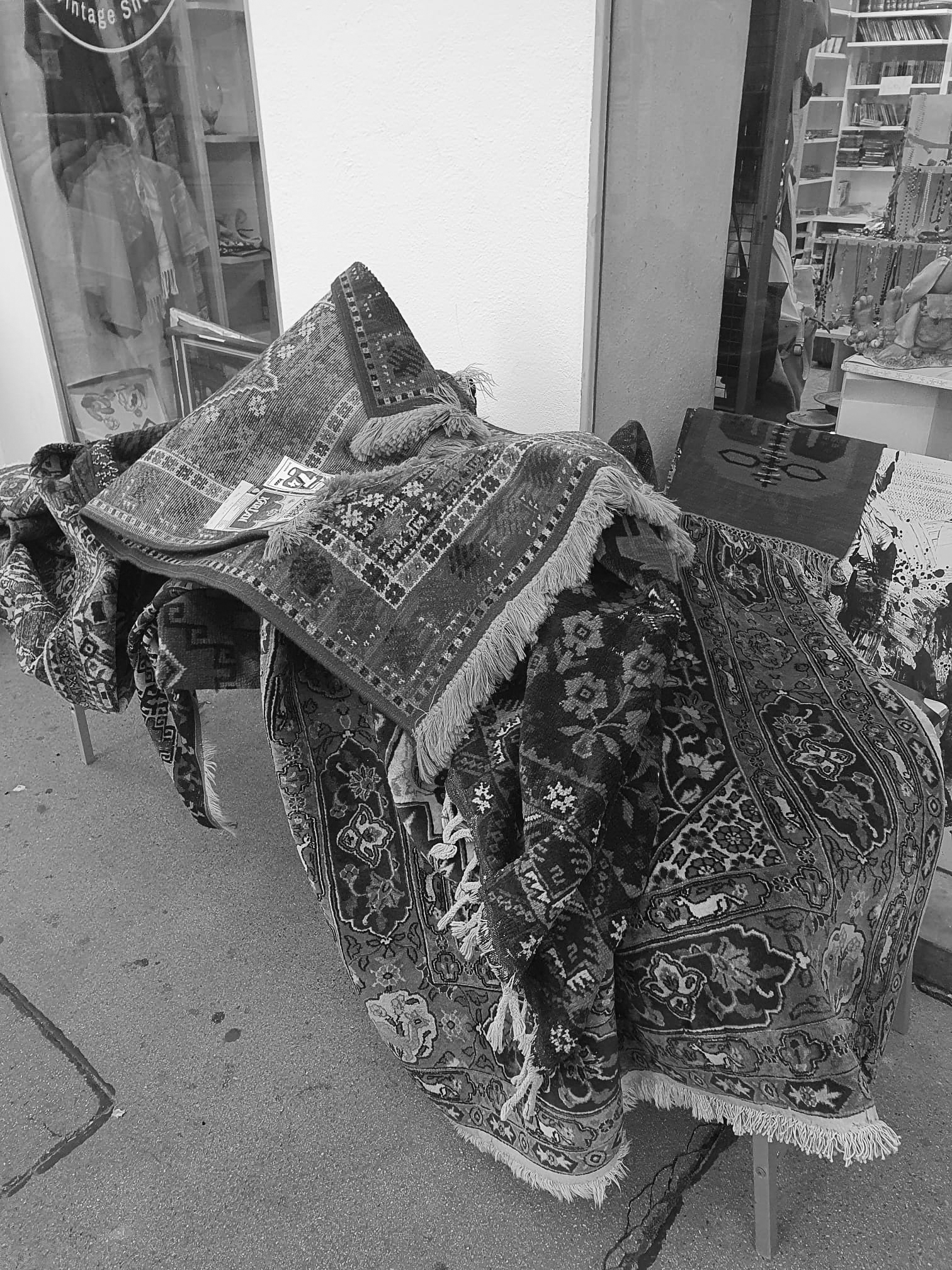
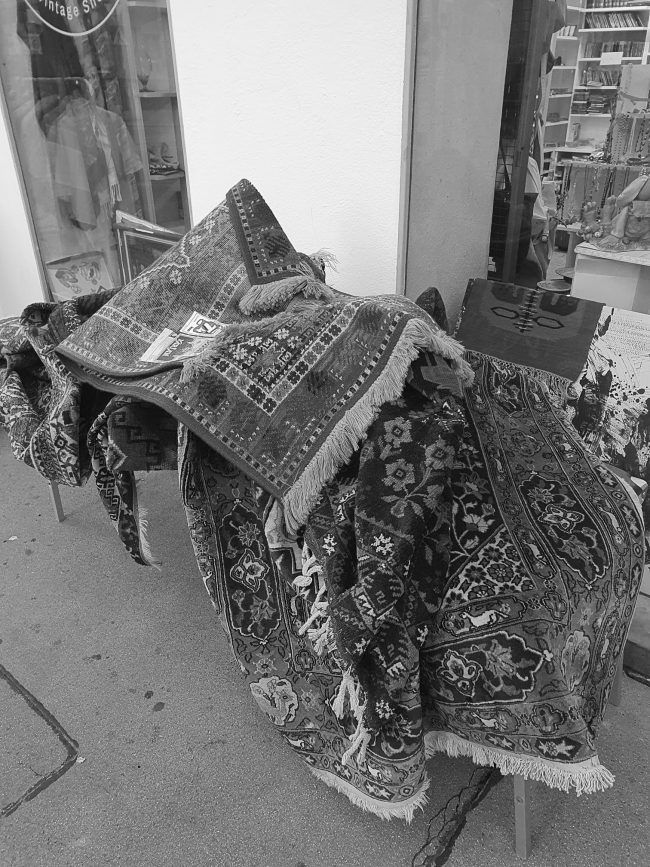
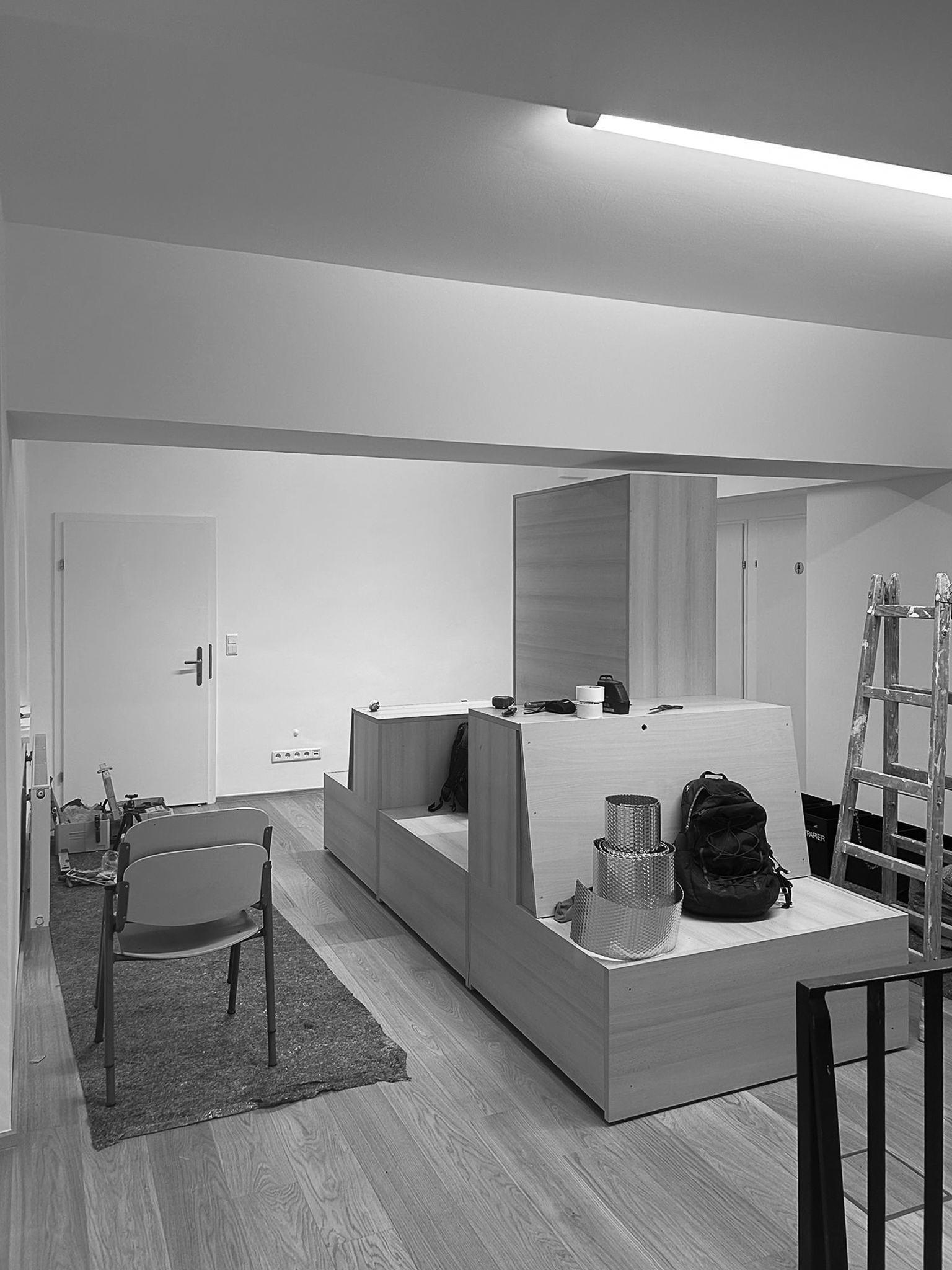
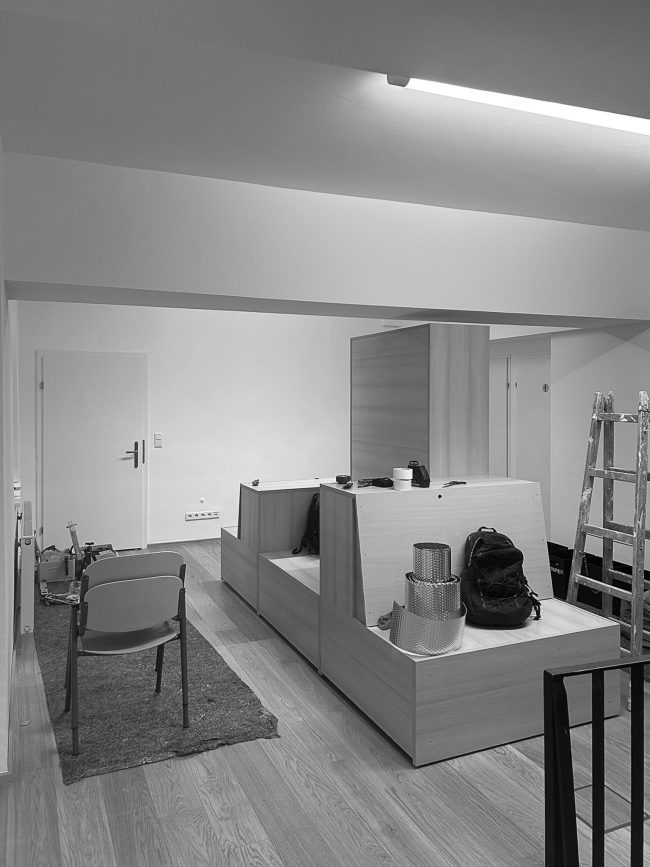
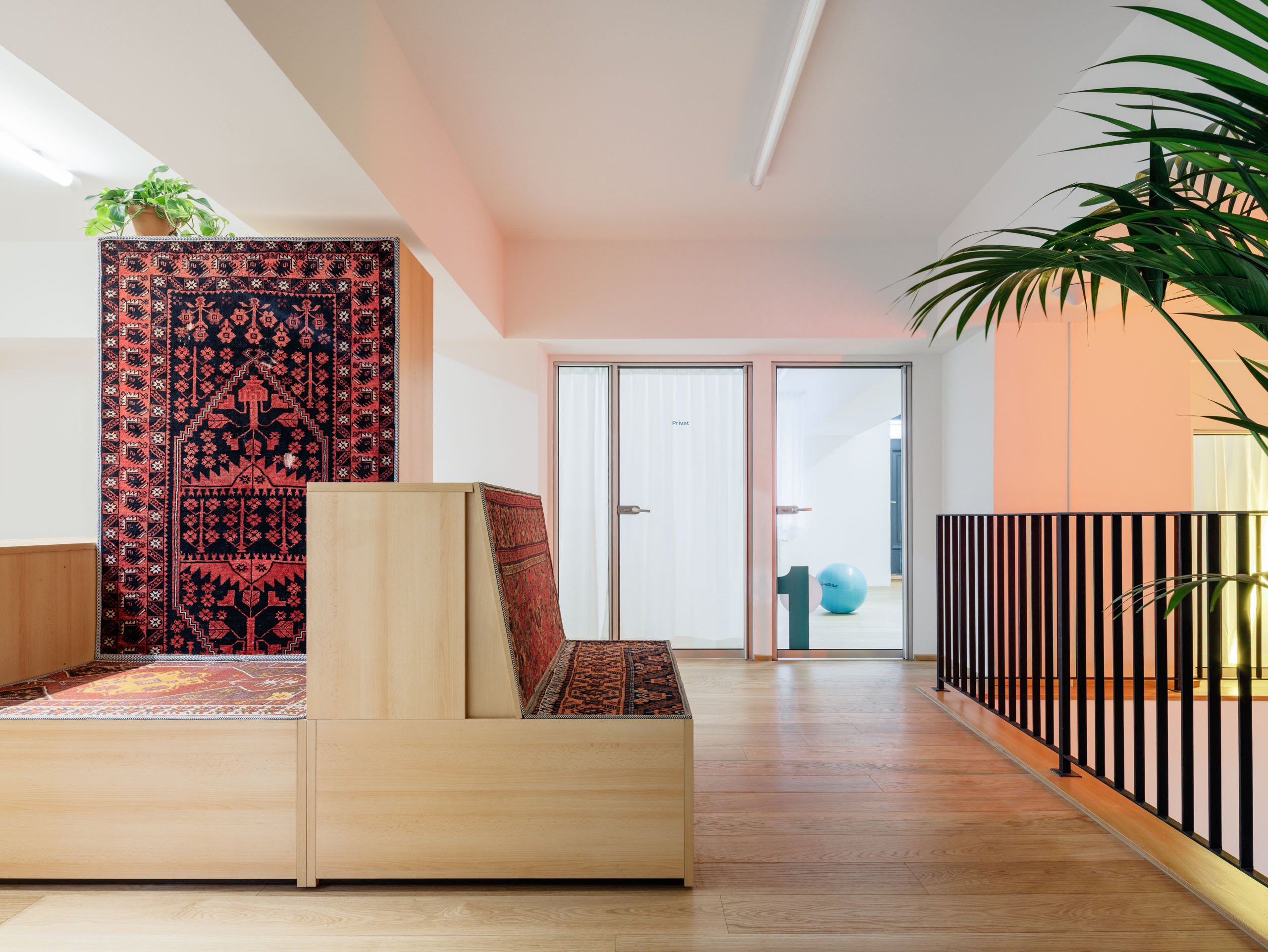
In the waiting area, a seating landscape was created from converted shelving units. Damaged Persian carpets were cut to size and edged, lending the furniture a distinct and high-quality appearance despite the exclusive use of reused materials.
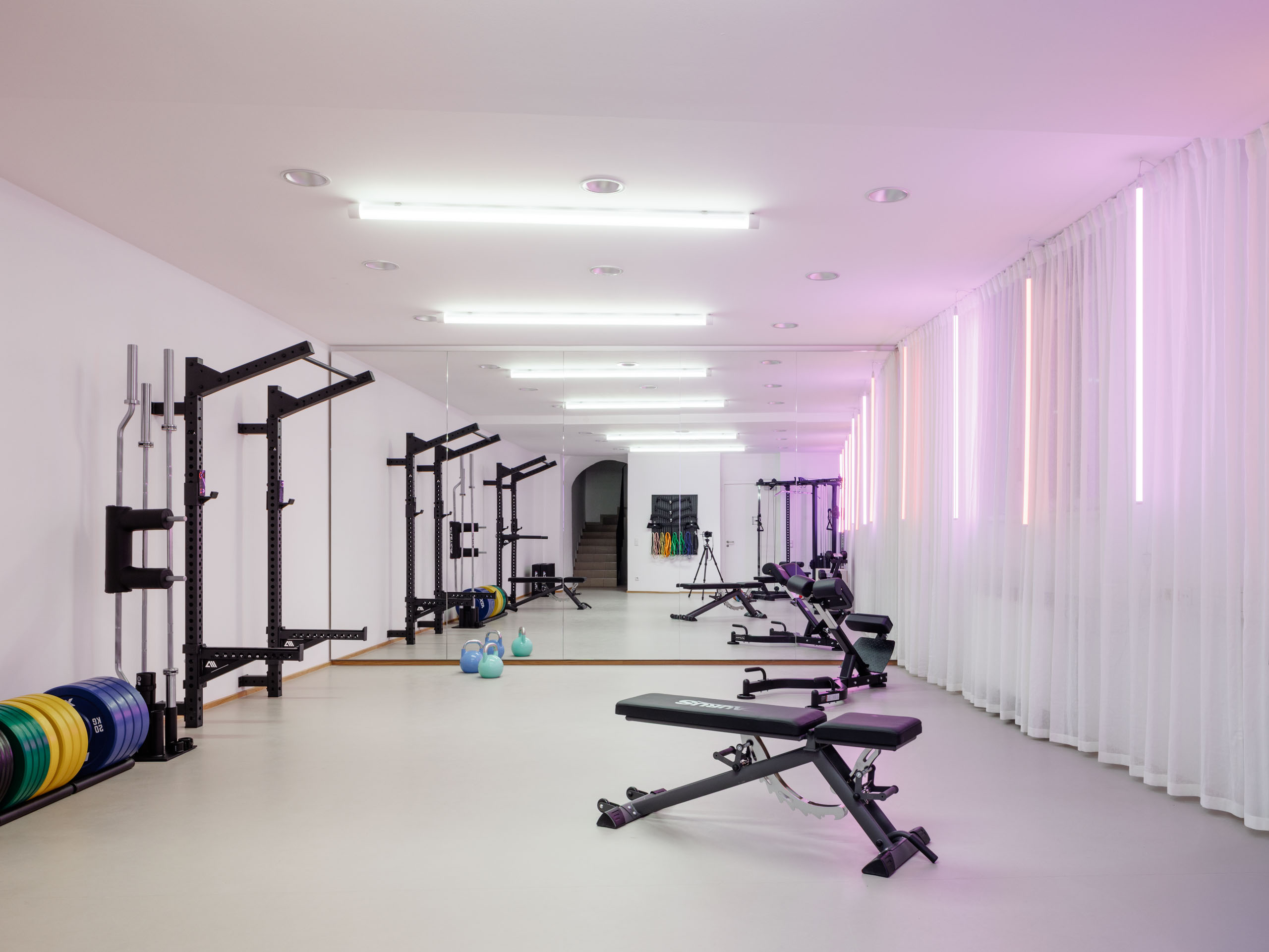
The practice is complemented by a exercise room in the basement, naturally ventilated through clerestory windows. A continuous curtain and colored pendant lights create a friendly, open atmosphere and accommodate larger therapy equipment.
The project illustrates how targeted interventions and a circular, reuse-focused approach can produce therapy spaces that are efficient, high-quality, and responsive to the needs of both therapists and patients.
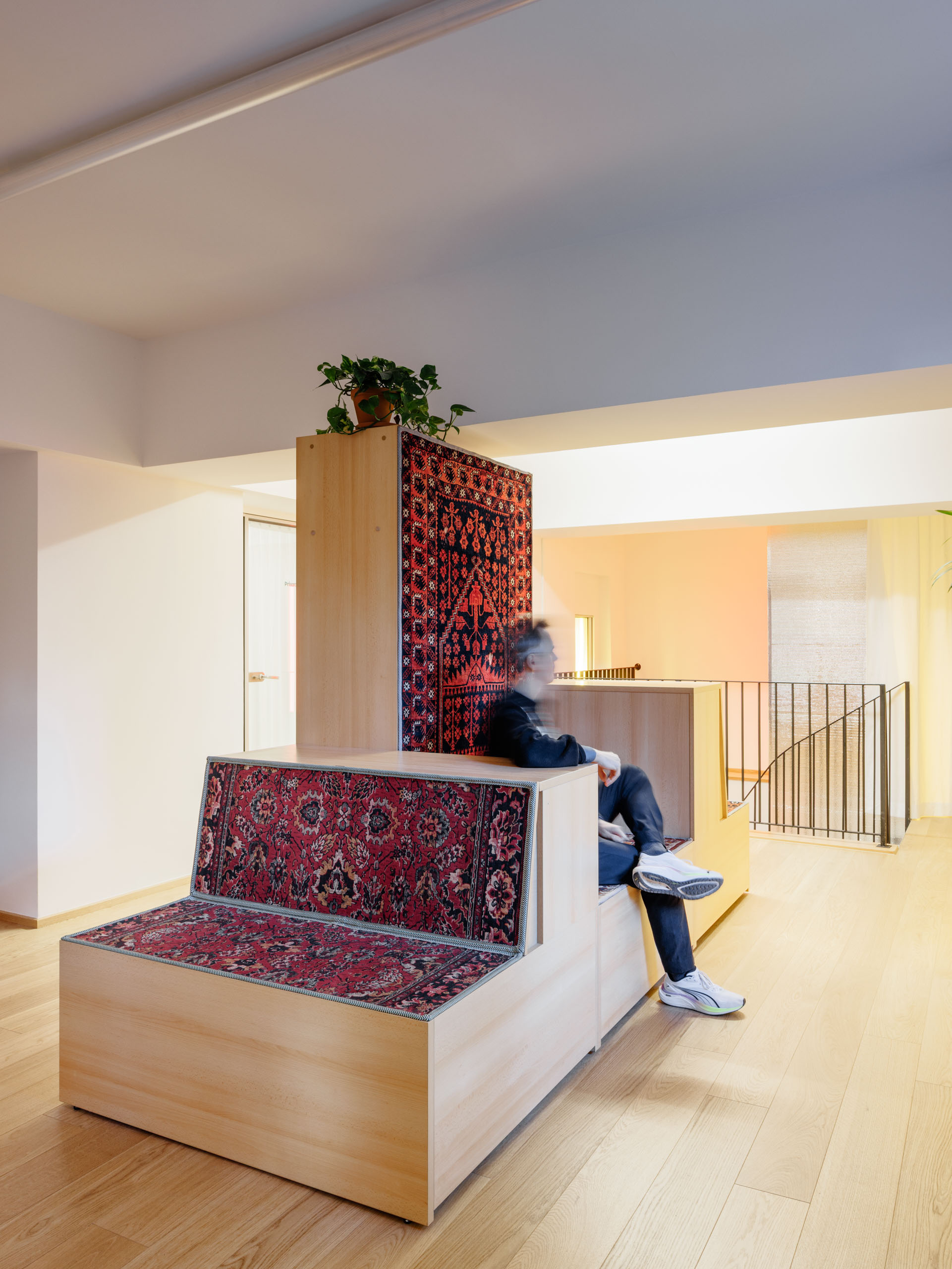
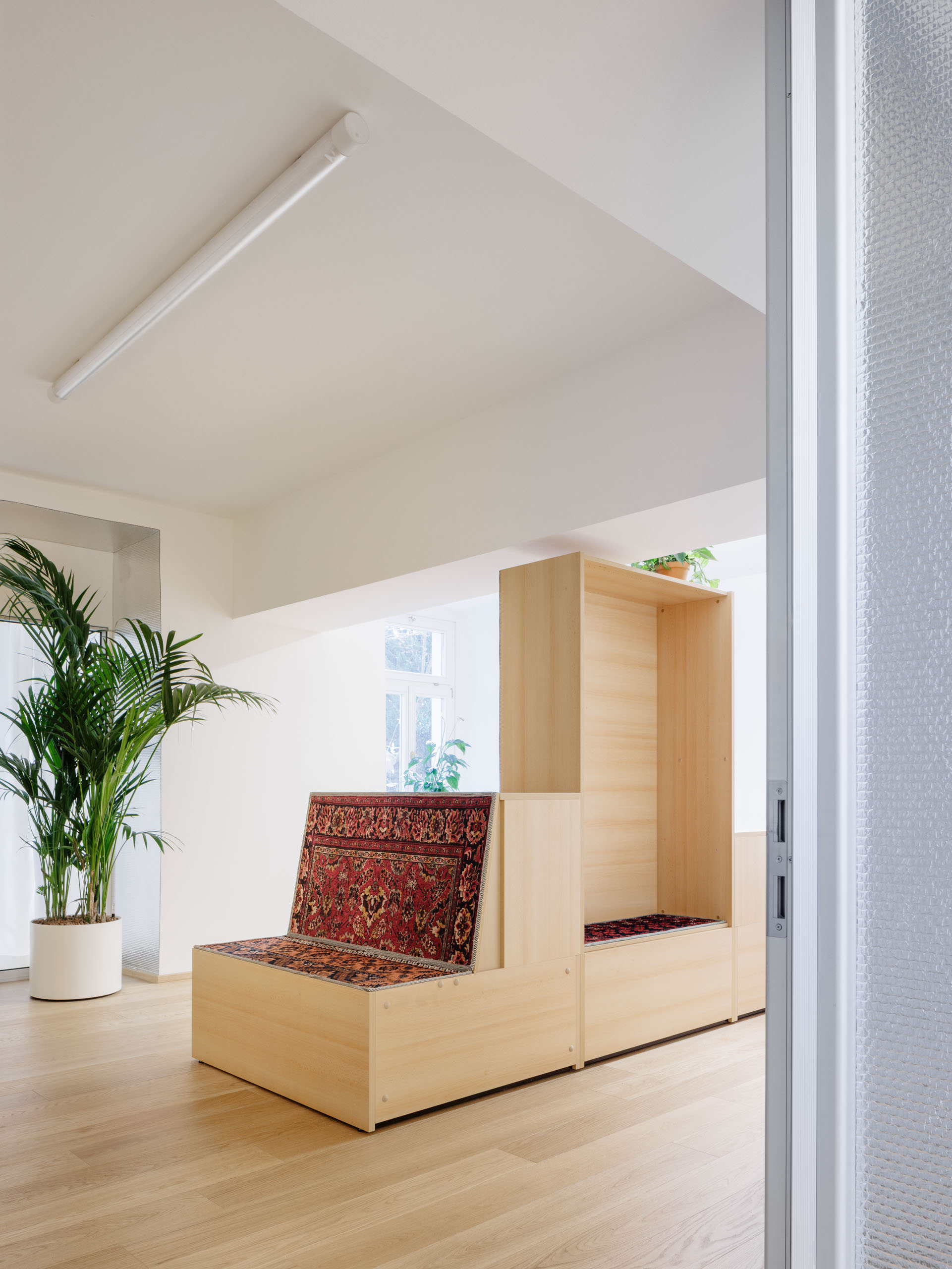
Reused shelving units and carefully recut Persian carpets create a unique, sustainable seating arrangement in the waiting area.
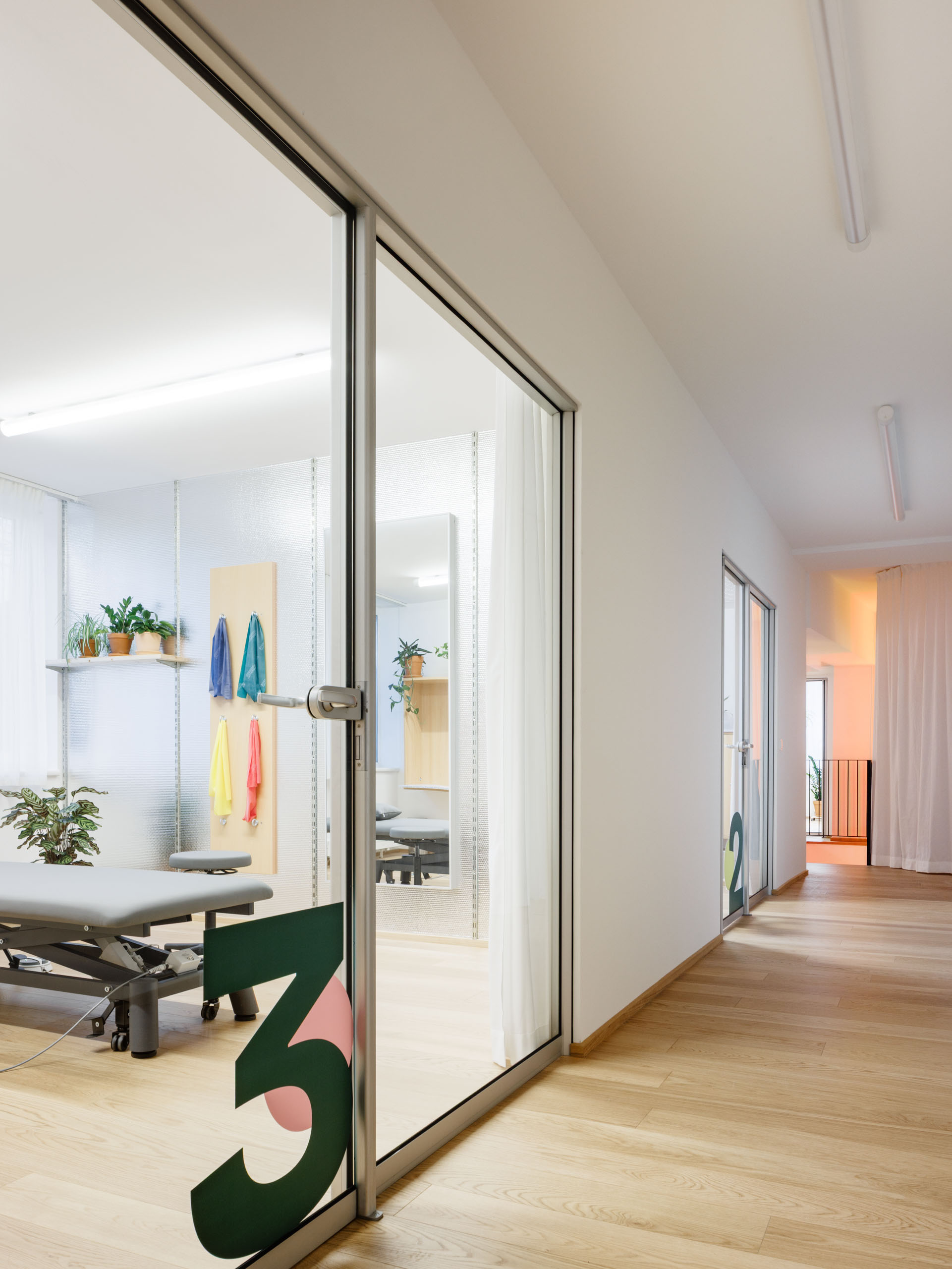
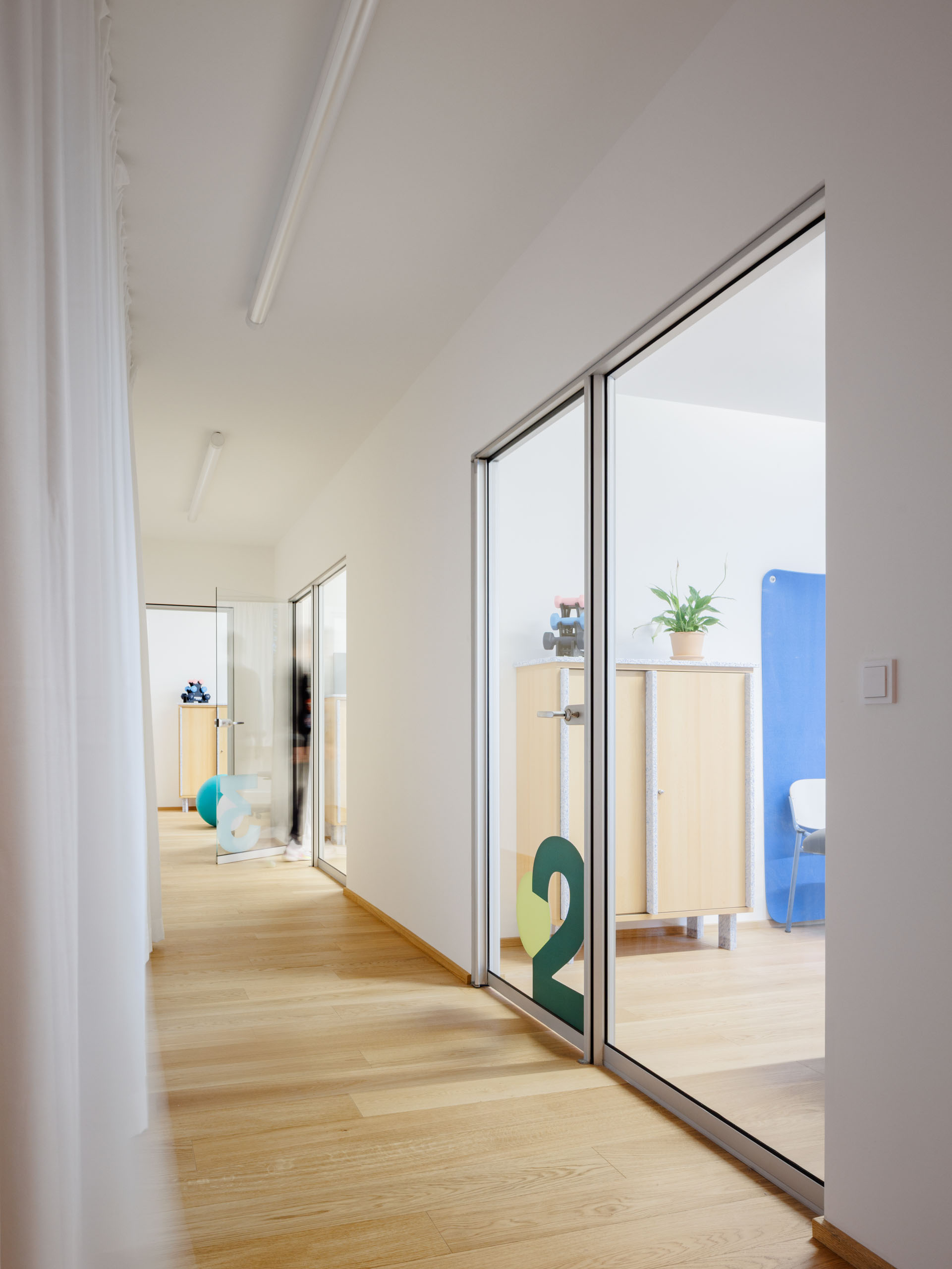
Large-format glass elements, carefully reused and precisely fitted, bring daylight deep into the practice.
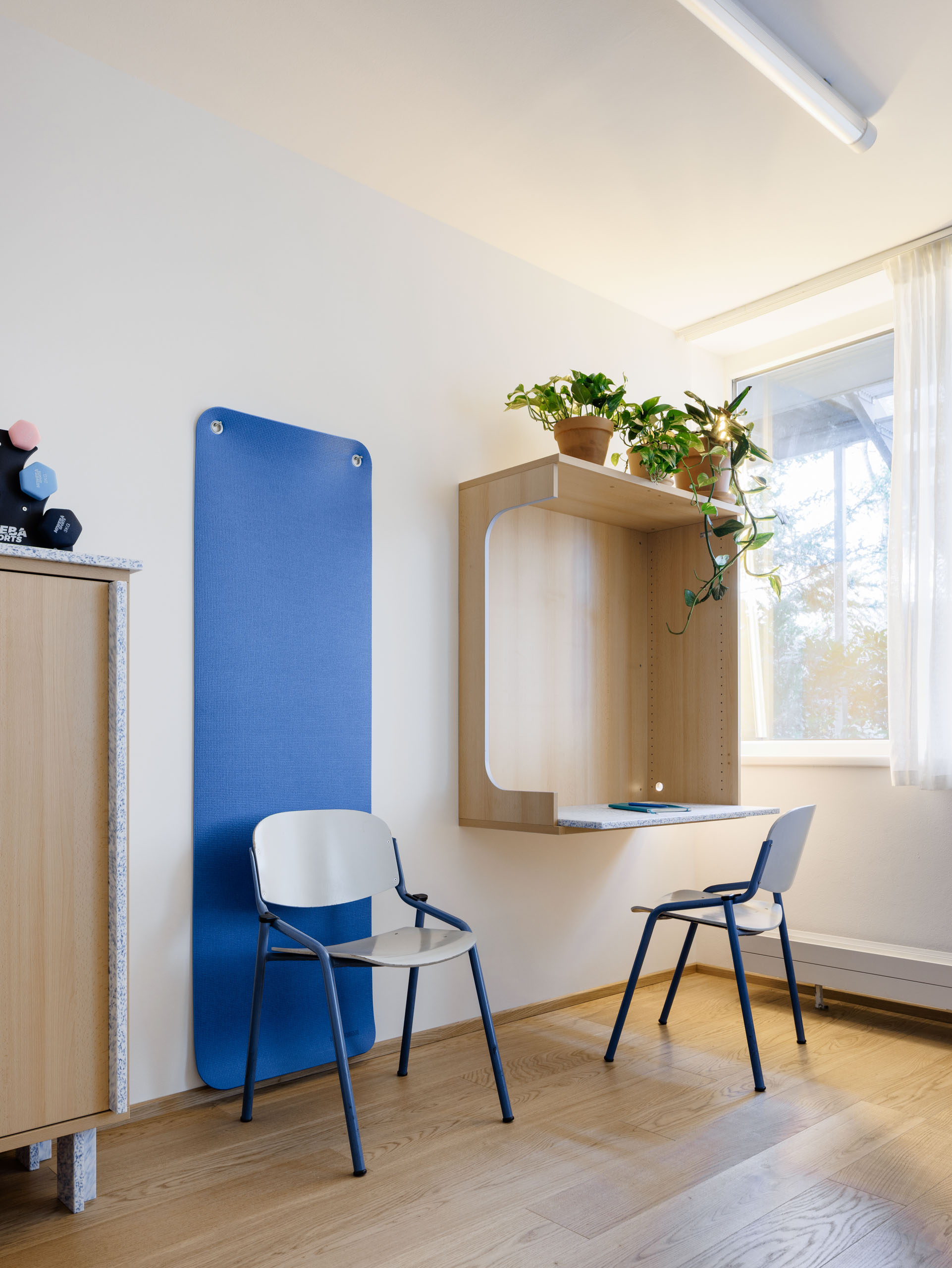
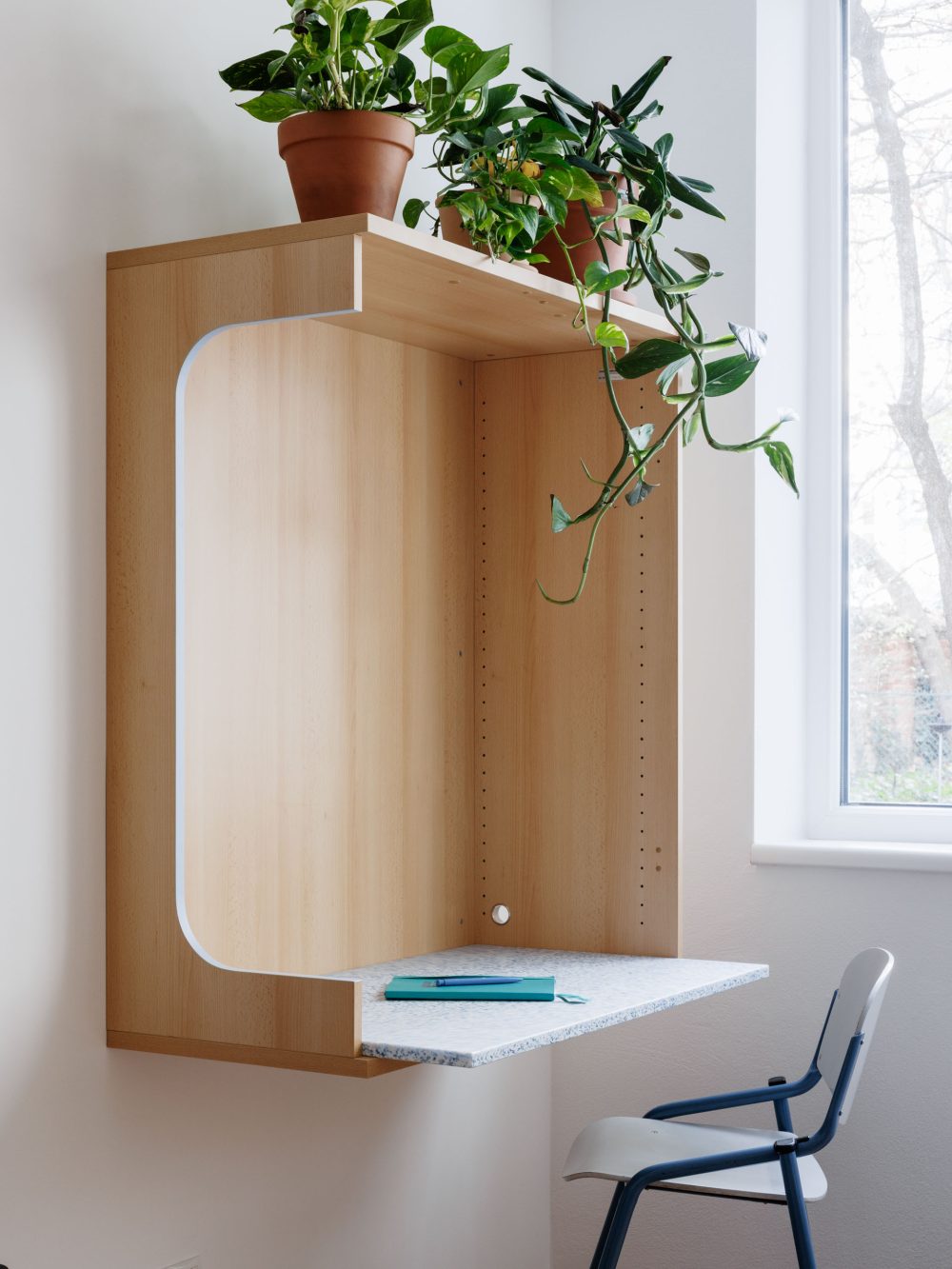
In the treatment rooms, old shelving units were converted into desks. One side of each desk was opened to facilitate conversations at eye level between therapists and patients.
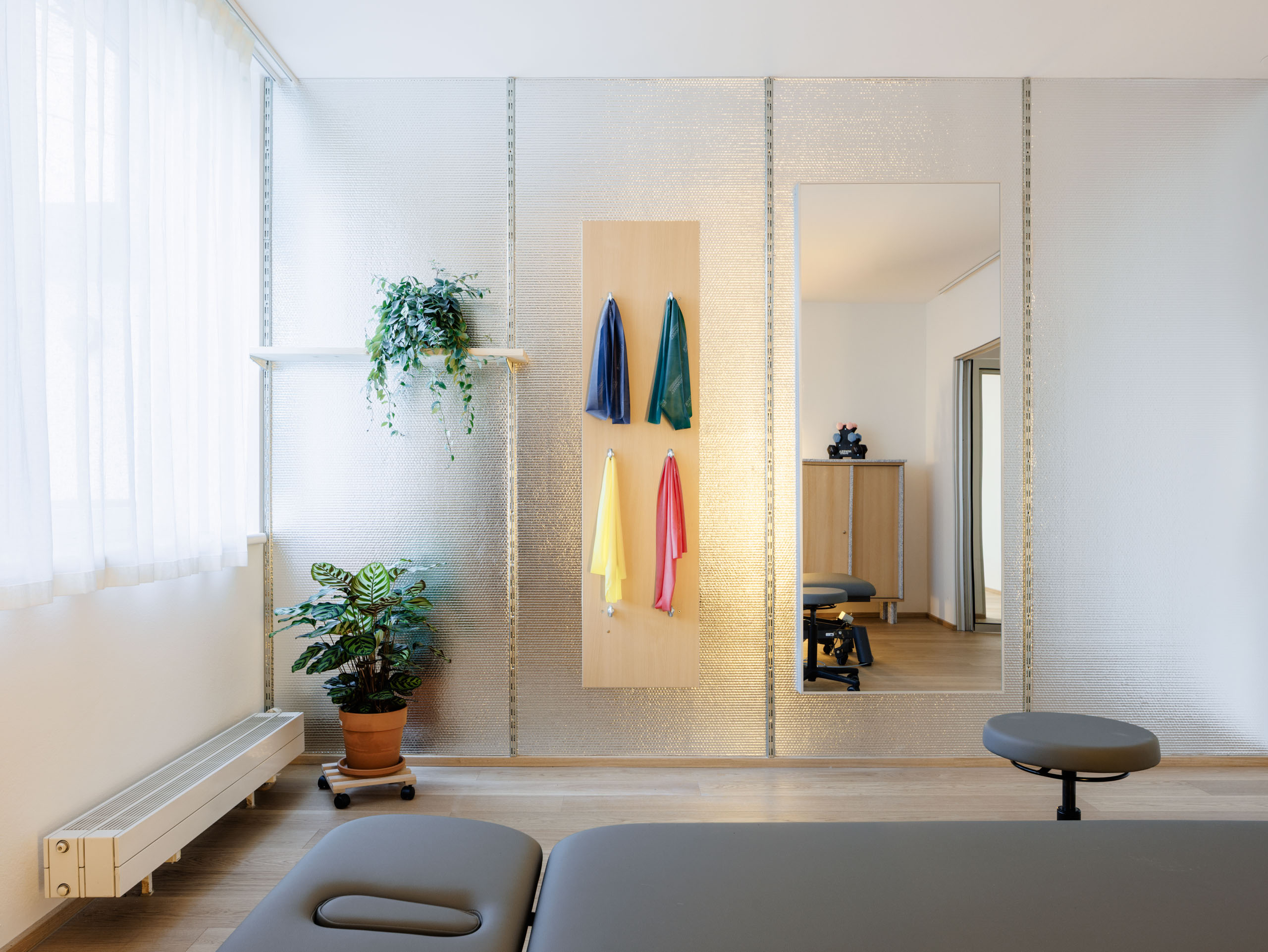
In each treatment room, a silver reflective foil was applied to one wall, distributing and amplifying the available light.
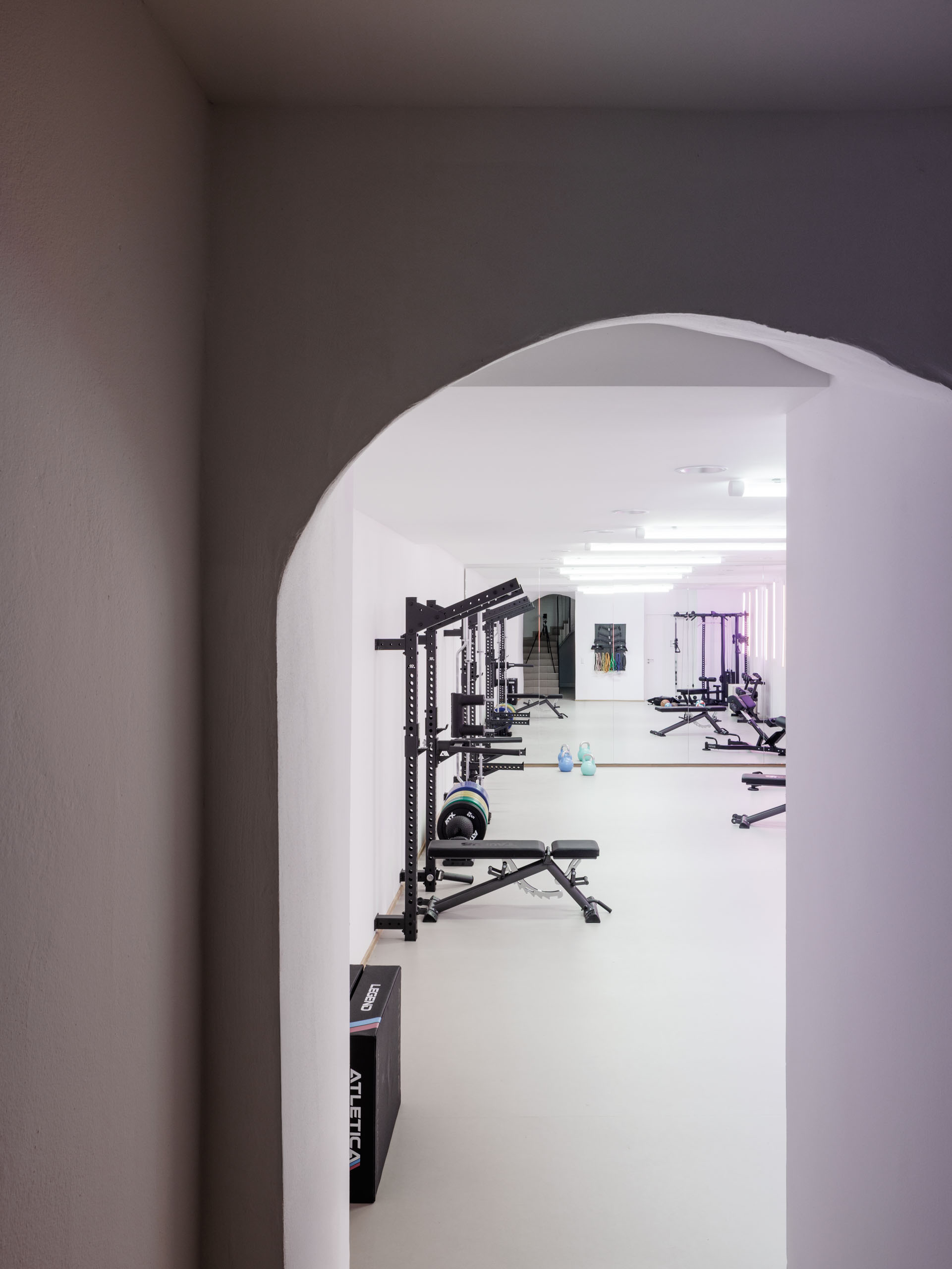
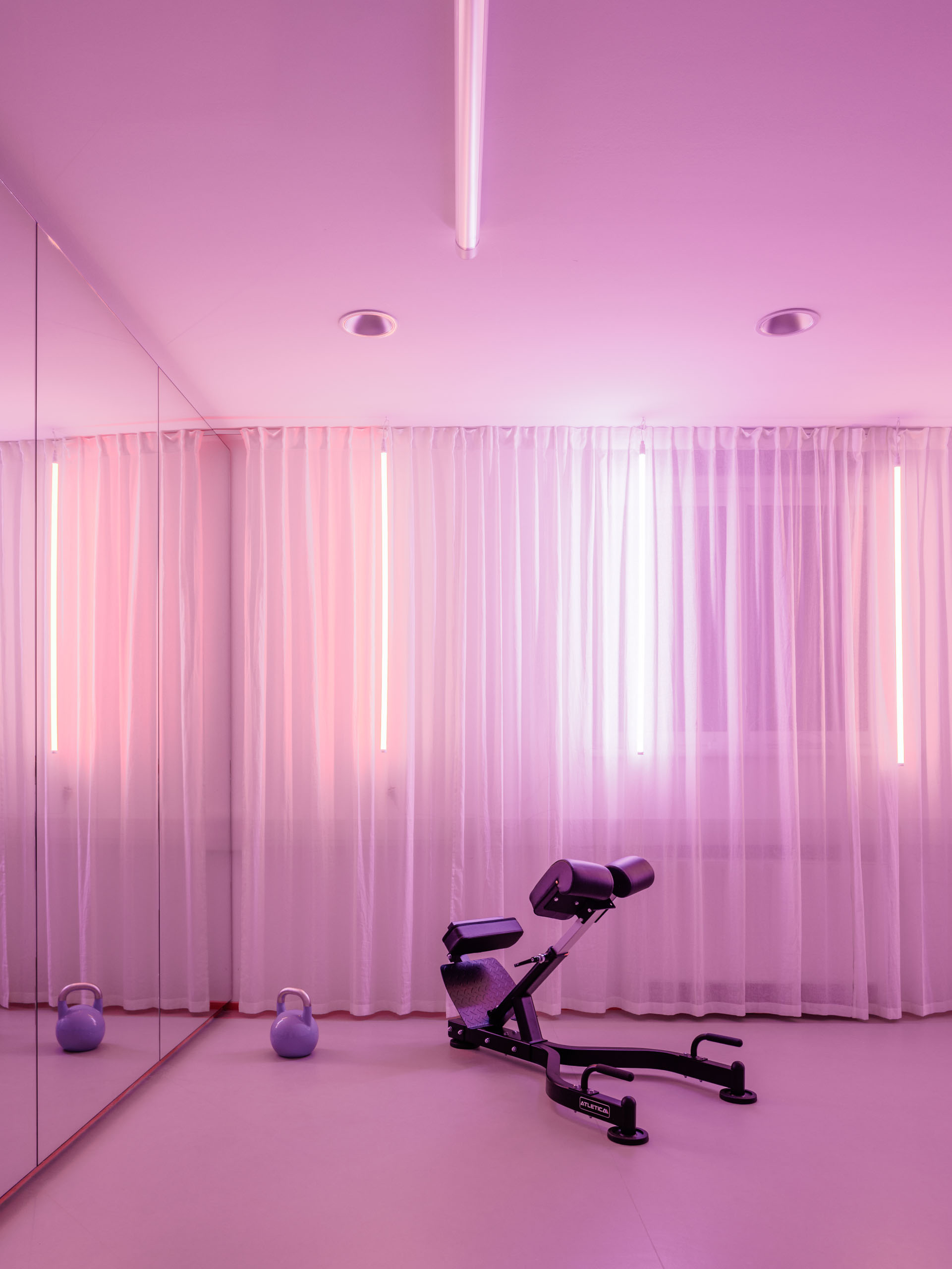
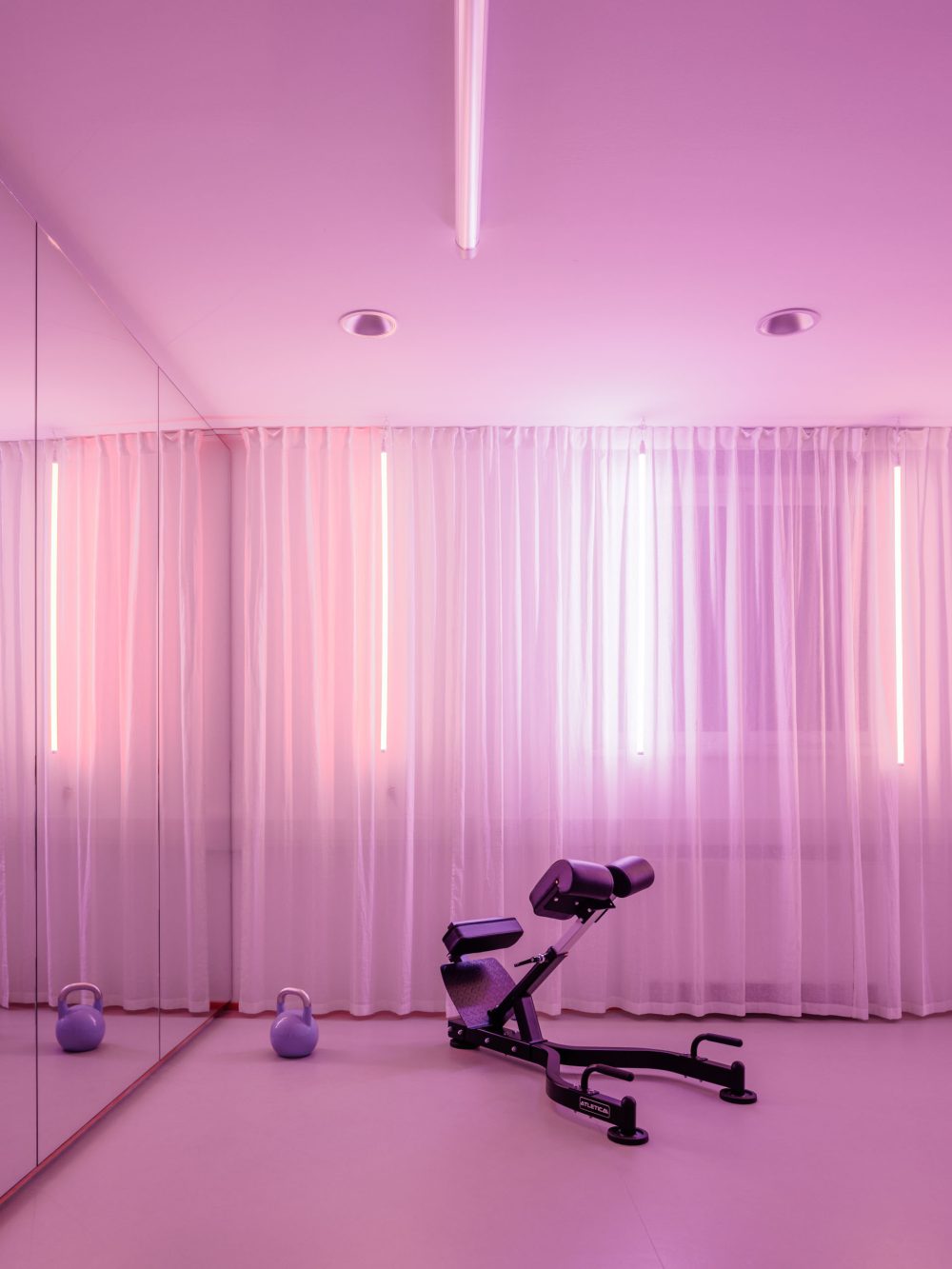
The practice is complemented by a exercise room in the basement, that can accommodate larger therapy equipment.
Project stages: